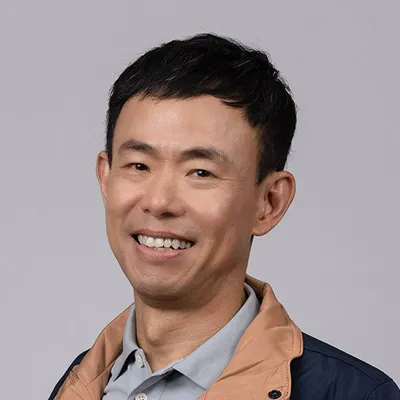
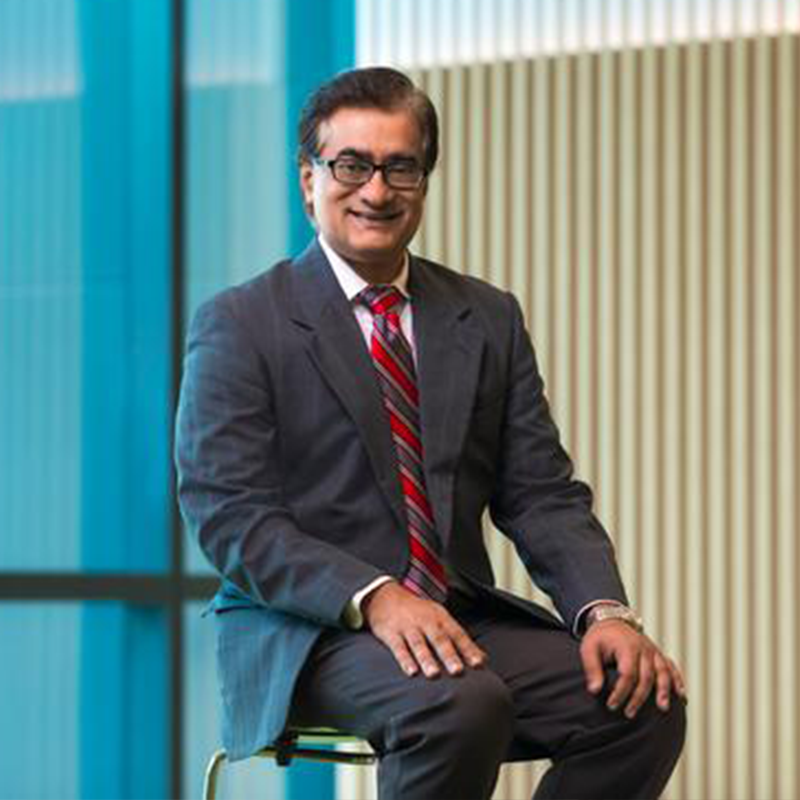
Professor Lily KONG, BBM, PBM, FBA
SMU President
Email: lilykong@smu.edu.sg
Tel: +65 6828 1940
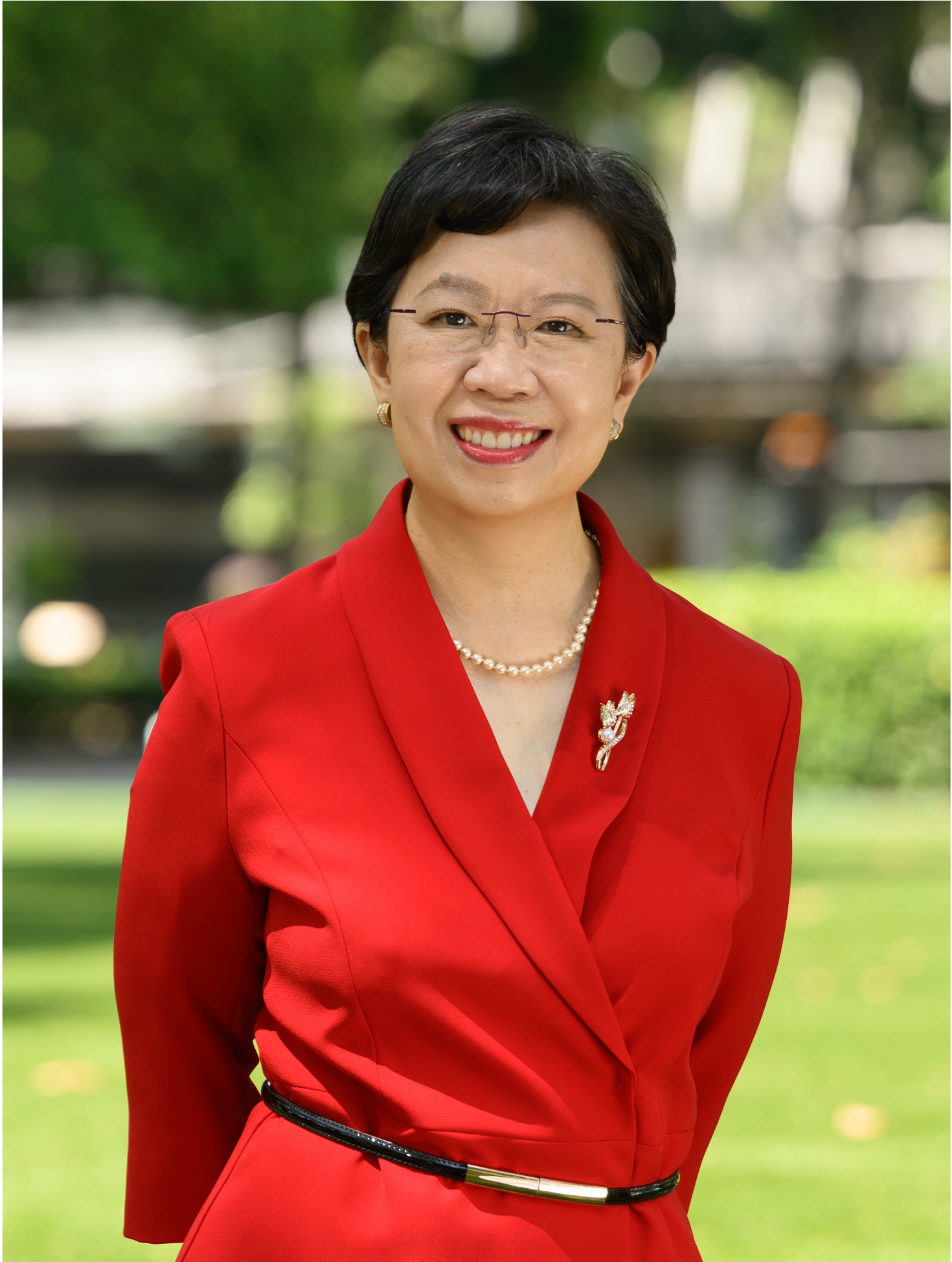
Professor Lily Kong BBM, PBM, FBA is President of Singapore Management University. A social and cultural geographer by training, she is internationally recognised for her work on urban transformation and social and cultural change in Asian cities.
Professor Kong is the fifth President of SMU, the first Singaporean to lead the University, and the first Singaporean woman to serve as President of any university in Singapore. She was Provost of SMU from 2015 to 2018.
Before joining SMU, she held various senior management roles at the National University of Singapore, including Vice Provost (Education), Vice Provost (Academic Personnel), Vice President (University and Global Relations), Dean (Faculty of Arts and Social Sciences), Dean, University Scholars Programme, Acting Executive Vice-President (Academic Affairs) at Yale-NUS College, and Director, Asia Research Institute. She was also a faculty member at the National University of Singapore’s Department of Geography for nearly 25 years.
Education
1991 PhD in Geography, University College London
1988 MA in Geography, National University of Singapore
1986 BA(Hons) in Geography (First Class), National University of Singapore
Area of Specialisation
Urban transformations, and social and cultural change in Asian cities
Leadership at SMU
As President, Professor Kong has led SMU through an important phase of institutional growth and renewal. Building on SMU2025, she advanced the University’s strategic priorities in Digital Transformation, Sustainable Living, and Growth in Asia, strengthening SMU’s position as a distinctive city university with deep strengths at the nexus of management, social sciences and technology.
Under her leadership, SMU launched new colleges, research centres and institutes, overseas centres, and strategic partnerships. The University also expanded its enrolment, research funding, industry engagement and philanthropic support, while investing in new infrastructure to support its next phase of growth.
In 2025, as SMU marked its 25th anniversary, Professor Kong launched the University’s refreshed Vision and Mission, reaffirming SMU’s aspiration to be Asia’s premier global city university. The refreshed Vision and Mission sharpen SMU’s identity as a university that is rooted in Singapore, connected to Asia, and committed to creating meaningful impact through education, research and partnerships.
She has since set out SMU2030: Shaping Impact, Transforming Lives, the University’s new five-year strategic plan. SMU2030 builds on the foundations of SMU2025, but places greater emphasis on purposeful impact. It focuses SMU’s contributions across four domains vital to Singapore and the region: Human Capital Development, Knowledge Creation, Economic Development, and Social and Community Life.
Through SMU2030, the University will deepen its work in transformative education, impactful research and purposeful partnerships. This includes developing an SMU graduate profile that cuts across undergraduate, postgraduate and continuing education; strengthening Asia-readiness and lifelong learning; advancing research that addresses complex societal challenges; and working more closely with industry, government and community partners to translate knowledge into practice.
SMU has gained international and regional recognition in areas including accounting research, software engineering, business school research, entrepreneurship, innovation and workplace culture. These achievements reflect the University’s broader ambition to grow not only in reputation, but in relevance and contribution.
In this SMU Impact Story, Professor Lily Kong reflects on her journey from geographer to university leader, and on what it means for a university to create impact that is purposeful, human and lasting.
Public Engagement and Leadership
Beyond the University, Professor Kong contributes actively to public, civic and international advisory work. Her appointments reflect her longstanding interests in education, cities, social cohesion, sustainability, philanthropy, public service and the future of Singapore.
She has been a member of Singapore’s Public Service Commission since 2009. She also serves in leadership and advisory roles across national institutions, philanthropic organisations, civic bodies and international education platforms.
Current appointments include:
- Member, Public Service Commission
- Co-Chair, President’s Challenge Council
- Director, Temasek Trust Limited Board of Directors
- Director, TT IPC Ltd Board of Directors
- Member, President’s Science & Technology Award Main Committee
- Fellow, Centre for Liveable Cities Fellows Panel
- Trustee, Caritas Singapore Community Council Ltd Board of Trustees
- Member, Presidential Council for Religious Harmony
- Member, Chinese Community Sub-Committee of the Community Committee, Elections Department Singapore, Prime Minister’s Office
- Member, Singapore College of Islamic Studies (International Advisory Panel)
- Chair, VinUniversity, International Advisory Board
- International Advisory BoardMember, Université Paris Dauphine-PSL
Professional Awards
An award-winning academic, Professor Kong has received prestigious honours. These include: Fellowship of the British Academy, Commonwealth Fellowship, Fulbright Fellowship, Fellowship of the Geographical Society of China, S.R. Nathan Fellowship, as well as the Victoria Medal from the Royal Geographical Society (Institute of British Geographers) and the Robert Stoddard Award from the American Association of Geographers. She is consistently ranked in the top 1-2% of her field in studies by Stanford, and has been conferred an Honorary Degree by Loughborough University.
She has also been recognised as the CASE Asia-Pacific Award winner for leadership (2026), Business Times - UOB Sustainability Impact Award’s Impact Leader of the Year (2025), in Forbes Asia’s Power Businesswomen list, Forbes inaugural 50 over 50 (Asia) and Tatler’s Asia’s Most Influential. She has been inducted into the Singapore Women’s Hall of Fame.
Her national awards include the Public Administration Medal (Silver) in 2006, Public Service Star in 2020, and Ministry of National Development Medallion in 2023.
Research Activities
She is an interdisciplinary scholar, with disciplinary roots in Geography. She is widely known for her research on urban transformations, and social and cultural change in Asian cities. In particular, she has published a large body of work on inter-communal relations (including religious and racial relations), social cohesion, national identity, cultural policy and cultural industries, creative cities and creative economy, urban heritage and conservation, smart cities, migration and education. She has served on multiple editorial boards of major international journals and is well-sought after as keynote speaker.
Op-Eds, Essays, Podcasts and Media Reports (a selection from 2022 onwards)
- From bilingualism to multilingual confidence: What the Dear You debate is telling us The Straits Times 29 June 2026
- Why the future belongs to wise cities, not just smart ones The Straits Times 25 June 2026
- In conversation with Lily Kong Not Alone Elsevier 2 June 2026
- As AI reshapes entry-level work, fresh grads must prepare for ‘third-year job’: panel Business Times 22 May 2026
- Can a 15-min city push up a 0.87 fertility rate? The Straits Times 8 May 2026
- The university must reinvent itself – or become irrelevant Front Row Podcast 21 April 2026
- Does a degree still guarantee a good full-time job? ST In Your Opinion podcast 1 April 2026
- Shifting Research Paradigms: From ‘Publish or Perish’ to ‘Purpose and People’ EFMD Global Focus Magazine 31 March 2026
- A new social contract for higher education Not Alone Elsevier 17 March 2026
- An ageing society tests more than our healthcare system The Straits Times 10 March 2026
- Asia’s future will be won by soft power, not force Business Times 17 February 2026
- Citizenship by law, history by choice: What the Albatross File asks of Singaporeans The Straits Times 23 January 2026
- Was the Asian Century a mirage? No, it’s a work in progress The Straits Times 30 December 2025
- Can Singapore be a city that bounces back and gives back? The Straits Times 2 October 2025
- ‘Regenerative and restorative’: SMU president Lily Kong on the power of human-environment ties Business Times 25 September 2025
- SMU president bags award for making sustainability part of university’s DNA The Straits Times 25 September 2025
- Measuring what matters: Towards consequential research Business Times 13 August 2025
- Lily Kong: Asian universities should define success on their own terms and play a greater role Lianhe Zaobao 13 August 2025
- Higher education is under siege. It needs to reinvent itself The Straits Times 23 June 2025
- Singapore at 60: Home truly is an idea that never stands still The Straits Times 8 July 2025
- Rethinking Diversity, Reimagining Education: Interview with Professor Lily Kong Inconvenient Questions 30 May 2025
- In Conversation with Professor Lily Kong : Rethinking Learning in an AI-Driven World Nord Anglia Education 22 May 2025
- Professor Lily Kong on Building Global Partnerships and Regional Leadership Times Higher Education Campus+ 5 May 2025
- Education for the 100-year life the Edword 5 May 2025
- Universities must rethink their research impact beyond metrics and rankings: SMU president Lily Kong The Straits Times 29 November 2024
- A rose or a unicorn? Asean’s mission under the spotlight The Straits Times 10 October 2024
- Is this home, truly? Reflections on Singapore as it turns 59 The Straits Times 8 August 2024
- Humanities and social sciences – everything, everywhere, all at once The Straits Times 8 June 2024
- What does Singapore need from its next generation? The Straits Times 1 March 2024
- Advancing women in academia: geographical mobility and the path to success Times Higher Education 29 February 2024 and Lianhe Zaobao 07 March 2024
- Time to rethink higher education in Singapore and set our own agenda The Straits Times 14 February 2024
- Singapore’s hawker culture at crossroads The Straits Times 18 December 2023
- Faith-based fissures take many forms The Straits Times 21 September 2023
- Universities should set goals for sustainable development Lianhe Zaobao 23 June 2023
- With generative AI, do we still need universities The Straits Times 11 May 2023, co-authored with Professor Lim Sun Sun
- A holistic blueprint for sustainability Times Higher Education 2 May 2023
- Young Singaporeans abroad and their misguided sense of superiority towards S-E-Asia The Straits Times 22 November 2022
- Religious competition: how to keep the good, minimise the bad The Straits Times 23 September 2016
Books
Authored Books
- Kong, L. (2025) Universities Reinvented: Shaping Legacy and Impact for a New World, World Scientific, 164pp.
- Kong, L. (2023) Singapore Hawker Centres: People, Places, Food, 2nd edition, Singapore: National Environment Agency and National Heritage Board. 240pp.
- Kong, L. and Woods, O. (2016) Religion and Space: Competition, Conflict and Violence in the Contemporary World. London: Bloomsbury. 199 pp.
- Kong, L., Ching, C-H, and Chou, T-L. (2015) Arts, Culture and the Making of Global Cities: Creating New Urban Landscapes in Asia, Cheltenham: Edward Elgar, 260 pp.
- Kong, L. (2011) Conserving the Past, Creating the Future: Urban Heritage in Singapore, Singapore: Straits Times Press, 260 pp.
- Kong, L. (2007) Singapore's Hawker Centres, Singapore: Singapore National Printers, 176 pp.
- Kong, L., and Yeoh, B. S. A. (2003) The Politics of Landscape in Singapore: Constructions of "Nation", Syracuse: Syracuse University Press, 254 pp.
- Winchester, H, Kong, L., and Dunn, K. (2003) Landscapes: Ways of Imagining the World, Harlow: Pearson, 2003, 206 pp.
- Kong, L., and Chang, T. C. (2001) Joo Chiat: A Living Legacy, Singapore: Editions Didier Millet, 152 pp.
- Perry, M, Kong, L., and Yeoh, B. S. A. (1997) Singapore: A Developmental City-State, World Cities Series. Chichester: John Wiley, 339 pp.
- Briffett, C., Kong, L., Yuen, B. K. P., and Sodhi, N. S. (1997) The Planning and Ecology of Park Connector Systems in Urban Areas, Singapore: National University of Singapore, 115 pp.
- Kong, L., Low, S. A., and Yip, J. (1994) Convent Chronicles: History of a Pioneer Mission School for Girls in Singapore, Singapore: Armour Publishing, 220 pp.
Edited Books
- Kong, L., Woods, O., Tse, J. K. H., (2025) Handbook of the Geographies of Religion, Springer, 1,030pp.
- Kapur, D., Kong, L., Lo, F. and Malone, D., eds., (2023) The Oxford Handbook of Higher Education in the Asia-Pacific Region: Oxford University Press, 877 pp.
- de Dios, A. and Kong, L., eds., (2020) Handbook on the Geographies of Creativity: Edward Elgar Publishing, 400 pp.
- Gomes, C., Kong, L. and Woods, O., eds., (2020) Religion, Hypermobility and Digital Media in Global Asia: Amsterdam University Press, 238 pp.
- Kong, L. and Sinha, V., eds., (2015) Food, Foodways and Foodscapes: Culture, Community and Consumption in Post-Colonial Singapore, Singapore: World Scientific, 247pp.
- Hopkins, P., Kong, L. and Olson, E., eds., (2013) Religion and Place: Landscape, Politics and Piety, Dordrecht: Springer. 222 pp.
- Kong, L., and O'Connor, J., eds., (2009) Creative Economies, Creative Cities: Asian-European Perspectives, Dordrecht: Springer, 227 pp.
- Kwok, K. W., Kwa, C. G., Kong, L., and Yeoh, B. S. A., eds., (1999) Our Place in Time: Exploring Heritage and Memory in Singapore, Singapore: Singapore Heritage Society, 216 pp.
- Olds, K., Dicken, P., Kelly, P. F., Kong, L., and Yeung, H. W. C., eds., (1999) Globalisation and the Asia Pacific: Contested Territories, London: Routledge, 293 pp.
- Savage, V. R., Kong, L., and Neville, W., eds., (1998) The Naga Awakens: Growth and Change in Southeast Asia, Singapore: Times Academic Press, 360 pp.
- Savage, V. R., and Kong, L., eds., (1997) Environmental Stakes: Myanmar and Agenda 21, Singapore: Hanns Seidel Foundation, 329 pp.
- Kong, L., Lim, E., and Lian, L. C., eds., (1996) Crossing Borders: A Geographical Field Expedition Guide, Singapore: Geography Teachers' Association, 126 pp.
- Yeoh, B. S. A., and Kong, L., eds., (1995) Portraits of Places: History, Community and Identity in Singapore, Singapore: Times Editions, 252 pp.
Selected Speeches
Professor Lily Kong speaks regularly at academic, policy, industry and leadership forums in Singapore and internationally. Her speeches reflect her work as a scholar of cities and society, as well as her leadership of a university navigating technological change, demographic shifts, sustainability challenges, and the evolving role of higher education.
Selected speeches are featured below. More speeches by Professor Kong are available on SMU’s intranet.
FORCE2026 Conference, Singapore, 3-5 June 2026
In her FORCE2026 keynote, at an annual conference by FORCE11 hosted by SMU Libraries, Professor Kong reflected on how universities and the scholarly communication community can move from diagnosis to implementation in advancing research impact. She argued that the challenge is not only to critique existing systems of rankings, metrics and incentives, but to build practical pathways towards research that is creative, catalytic and consequential.
Drawing on SMU’s own impact journey, she called for a portfolio approach to reform — one that recognises diverse forms of scholarly contribution, strengthens trust in research, and connects knowledge more deliberately to society’s needs. Her address positioned universities as stewards of knowledge and public purpose, with a responsibility to ensure that research serves communities, informs policy, and contributes meaningfully to the future.
Read more
CASE Asia-Pacific Leadership Award, Brisbane, 8 May 2026
In accepting the CASE Asia-Pacific Leadership Award 2026, Professor Kong reflected on leadership as a collective endeavour shaped by trust, gratitude and shared purpose.
Opening with the SMOO Challenge, SMU’s community fundraising race, she spoke about the University’s commitment to ensuring that no student is left behind for lack of financial means. She situated this work within a larger understanding of advancement: not only as fundraising, but as the patient work of widening possibility, building community and sustaining relationships across generations.
Professor Kong paid tribute to mentors, colleagues, benefactors, alumni and students, arguing that universities are built by those who believed before results existed, built before recognition came, and stayed long after applause faded. She also reflected on the university as a lifelong partner — one that walks with students into alumnihood, and remains relevant through continuing development, career guidance, mentorship and service.
The speech further connected advancement to SMU’s wider purpose encapsulated in SMU2030, the University's strategic plan: advancing society and economy by addressing defining questions around how we live, work and age. At its heart was a simple conviction: philanthropy follows trust, and the deeper work of universities is slower, more human, and infinitely important.
Read more
Book Launch of Universities Reinvented: Shaping Legacy and Impact for a New World, 12 August 2025
“What is a university for?” This enduring question lies at the heart of Universities Reinvented, a collection of Professor Lily Kong’s three IPS–S R Nathan Lectures. In them, she explores how universities can navigate demographic shifts, widening inequalities, and a rapidly changing world of work; how they might educate for the 100-year life; and how to measure impact beyond traditional metrics of prestige and performance. She also reflects on “unwritten lectures” — the moral courage required of institutional leaders, and the opportunity for Asian universities to shape global conversations on their own terms. In launching the book, Professor Kong called on universities to be “stewards of possibility” — helping individuals reinvent themselves and enabling societies to reimagine their futures.
Read more
Institute of Policy Studies, October to November, 2024
Through a compelling three-part lecture series, SMU President and 15th S R Nathan Fellow, Professor Lily Kong, explored the evolving role of universities in shaping societal development. She reflected on the historical transformations of universities, as well as their value and future trajectories, in a rapidly changing world.
In the first lecture Through the Looking Glass: Insights into the Origin and Evolution of Universities, she illustrates how, throughout history, the university has reflected changing societal contexts. The contemporary university is no different – a condition of our post-industrial, post-truth world.
In the second lecture, At the Crossroads: Universities for the 100-Year Life, Prof Kong examined what a university stands for as humanity contemplates and confronts the very real possibility of a 100-year life. The relevance of the university will, of necessity, extend beyond the narrow slice of three to four years in the first of four quartiles of human life.
In her third and final lecture, Beyond the Ivory Tower: Research and the Dilemmas of Quality and Relevance, she invited discussion about the responsibility of universities – as a brain trust – to the world beyond their walls. Prof Kong addressed questions of misinformation, manipulation, and misconduct in research, but also, more optimistically, research that is creative, catalytic, and consequential.
Read more
iGER Programme, National Chengchi University, Taiwan, 12 March 2026
At the invitation of National Chengchi University, Professor Kong examined how universities must rethink general education for an era in which people may live, learn and work across a 100-year life. She argued that higher education can no longer be understood as preparation for a single career or a narrow early-adult phase of life.
Instead, universities must equip individuals with the intellectual, ethical and adaptive capacities to keep learning across multiple life stages. She made the case for whole person education as central to university transformation — not as an optional complement to disciplinary training, but as a foundation for judgement, resilience, purpose and contribution in a rapidly changing world.
Read more (English | Mandarin)
Presidents Forum on Innovation in Teaching & Learning: Shaping the Future of Higher Education, VinUniversity, Hanoi, Vietnam, 6 December 2025
At VinUniversity’s Presidents Forum on Innovation in Teaching and Learning, Professor Kong addressed a question facing higher education everywhere: if artificial intelligence can generate answers, automate tasks and personalise learning, what is the continuing value of a university?
Her answer was that AI makes the human purposes of university education more important, not less. Universities must go beyond the transmission of knowledge to cultivate discernment, creativity, ethical reasoning, collaboration and the capacity to ask better questions. In an AI-driven world, the university’s role is not simply to help students use technology well, but to help them understand what technology is for, whom it serves, and how human judgement can guide its use.
Read more
MHA Phoenix Speaker Series, Ministry of Home Affairs, Singapore, 31 July 2025
At the MHA Phoenix Speaker Series, Professor Kong explored the 3Rs of city-making: how cities can become more resilient, regenerative, and restorative in the face of disruption and change.
She argued that the future of cities cannot be understood through infrastructure, technology or policy alone. Cities are complex systems shaped by interdependencies between people, places, institutions, environments and cultures. The work of city-making therefore requires both science and art: rigorous evidence, systems thinking and planning discipline, as well as judgement, imagination and sensitivity to human experience.
Against a backdrop of climate pressures, demographic change, technological disruption and social fragmentation, she called for cities that can withstand shocks, regenerate their environments and restore the well-being of their residents. The 3Rs framework points to an urban future in which cities are not only better managed, but more deeply attuned to the communities and environments they serve.
Read more
Social Science & Humanities Ideas Festival Launch, National University of Singapore, 20 March 2024
Social Science and humanities research (SSHR) is a strategic asset critical to Singapore’s navigation of increasingly complex and inter-related social and global challenges. Its relevance permeates every aspect of our lives, including the insights it offers on how to better harness science and technology for the greater good. Compared to about 40 years ago, when one University in Singapore offered humanities and social science programmes, the development of the SSHR ecosystem in Singapore has increased opportunities, funding support, and recognition for scholars. Nevertheless, gaps and challenges remain. Traditional metrics for assessing research impact require recalibration, if not a complete shift, to broader indicators beyond conventional academic achievement. Scholars must strategise how SSHR can create demonstrable impact, in both academic and social terms. This necessitates adopting more diverse modes of communication to ensure research findings resonate not only with academics but also policymakers and industry stakeholders, as well as broader audiences and communities, thereby amplifying their impact.
Read more
International Conference on Cohesive Societies (ICCS), 6 September 2022
Social cohesion, a multi-dimensional concept built on trust, community, shared values, and solidarity, is essential for social harmony. Adapting Bertelsmann Stiftung’s Social Cohesion Framework for Southeast Asia provides insights into Singapore’s cohesion levels. Given Singapore’s geography, history, and demography, fault lines are unavoidable – these include race and religion, migration and multiculturalism, inequality and inequity, virtual and physical divides, and inter-generational disconnects.
Mitigating these challenges requires nurturing social relations, fostering connectedness, and prioritising the common good. The management of social cohesion in Singapore is multi-faceted, combining state-led initiatives – through legal, policy, and regulatory mechanisms – with grassroots efforts. However, persistent issues such as xenophobia, NIMBYism, and perceived competition for opportunities continue to pose challenges to cohesion efforts.
Intangible Cultural Heritage Symposium by the National Heritage Board and the International Information and Networking Centre for Intangible Cultural Heritage in the Asia-Pacific Region, 31 August 2021
In this keynote address, Professor Kong explores the interconnectedness of tangible and intangible cultural heritage and emphasises the critical role of youth in sustaining it. She argues that cultural heritage must be relevant to young people’s lives in order to endure, highlighting five key strategies inspired by Maslow’s hierarchy of needs.
She discusses how heritage can address safety needs (e.g., job security through heritage industries), social belonging (e.g., fostering identity through heritage-focused clubs), and esteem (e.g., recognition through awards and competitions). She also emphasises the cognitive appeal of heritage education across disciplines and the aesthetic engagement of young people through contemporary media like music videos and interactive technology.
Professor Kong calls for embedding cultural heritage into education, community engagement, and everyday life, ensuring it remains a living, dynamic force rather than a static relic of the past.
Read more
Denton Rodyks Dialogue Global Smart Cities: Challenges and Opportunities, 25 September 2020
Professor Lily Kong explored the challenges of scaling smart city initiatives in ASEAN through the ASEAN Smart Cities Network (ASCN). While the ASCN aims to enhance quality of life, competitiveness, and sustainability, Professor Kong highlighted six key challenges: overlooking cities’ historical contexts, mismatched development of digital and material infrastructure, corporate-driven privatisation, growing socio-spatial inequalities, poor integration across governance layers, and the risks of hasty policy transfers.
She advocated for a measured approach, urging policymakers to "go slow" and "go small," prioritising incremental improvements and aligning infrastructure with local needs. While counterintuitive, Professor Kong emphasised the importance of respecting cities’ unique contexts, ensuring smart technologies serve as catalysts for meaningful change, and leveraging academia’s role in moderating policies to empower local agency and foster sustainable urban development.
Read more