




showSidebars ==
showTitleBreadcrumbs == 1
node.field_disable_title_breadcrumbs.value ==

SHAPING IMPACT,
TRANSFORMING LIVES

Chairman's
Message

The world is changing at speed. For universities, standing still is not an option. It may be tempting to chase every new idea or react to every passing trend. Yet strong leadership lies in rootedness, in our mission, values, and purpose — even as we adapt with agility to what the world demands. 

With the same pioneering spirit that has defined the institution since its founding, SMU2030 charts a clear course for the future. Its pillars of Education, Research, and Partnerships are the levers through which we create meaningful, real-world impact. 

The strategies outlined herein set out what we want to achieve — but it is culture that determines how we will succeed. If we nurture a culture that is agile, collaborative, and impact-driven, SMU2030 will not remain words on a page; it will become a living commitment. 

For Singapore Management University (SMU), clarity of purpose means preparing graduates who are agile and adaptive, advancing research that addresses society's most pressing challenges, and forging partnerships that make a difference for Singapore, Asia, and the world. 

The Board of Trustees and I stand firmly behind this plan. Now it is up to every member of the SMU community — faculty, staff, students, alumni, and partners — to take ownership of it. 

Rooted in purpose, and with confidence in direction, we can shape impact and transform lives together.

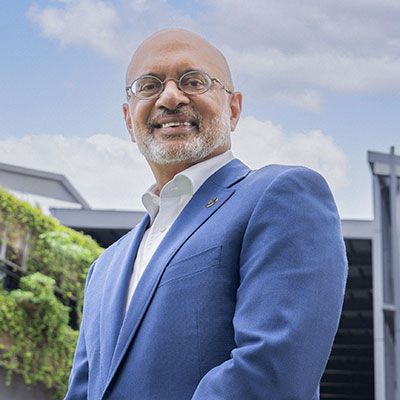
Mr. Piyush Gupta
Chairman

SMU Board of Trustees
 

President's
Message

As SMU marks its 25th Anniversary, the world around us is changing rapidly. Shifting geopolitical dynamics, accelerating technological disruption, changing demographics, and rising societal expectations are reshaping the higher education landscape, making it more competitive and complex than ever.

In this environment, SMU must take deliberate steps to meet evolving industry and employer needs, and to respond to the growing demand for research that delivers real-world impact and thought leadership on society's most pressing challenges.

The SMU2030 Strategic Plan charts SMU's path for the next five years, driven by a purposeful impact agenda, focused on four domains vital to national and regional advancement: Human Capital Development, Knowledge Creation, Economic Development, and Social and Community Life. To deliver on this ambition, we will continue to build on our Education, Research, and Partnerships, supported by key enablers: Talent, Financial Resources, Digital Infrastructure, Physical Infrastructure, and Brand and Reputation.

We will continue to nurture agile and adaptive graduates who can thrive in a rapidly changing world, driving positive change through innovative insights and solutions, while grounded in ethics and social responsibility.

We will pursue research that addresses complex real-world challenges that span across our strategic priorities (Digital Transformation, Sustainable Living and Growth in Asia), enhancing the University's academic reputation and contributing to meaningful societal impact.

And we will forge partnerships that enable and support education and research objectives, expand learning opportunities, facilitate collaborations to address societal challenges, create knowledge transfer to benefit society, drive innovations and create real-world impact.

As we embark on this next chapter together, I invite the SMU community to be intentional in our quest to make a positive difference within and beyond academia.

Together, we will build a university of impact – one that empowers people, advances knowledge, and uplifts communities across generations.

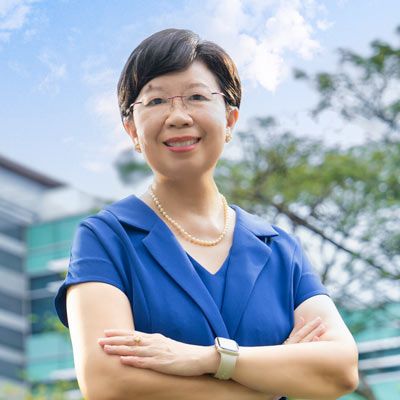
Professor Lily Kong
President
 

Our Refreshed
Vision and Mission

Launched in January 2025 at the onset of SMU's 25th anniversary, our Vision statement embraces our roots in Asia while engaging globally; celebrates our city location as an asset; claims the space at the nexus of management, social sciences and technology; foregrounds our DNA in driving innovations and transcending boundaries; and ultimately, declares our aspirations to transform lives. Our Mission statement spells out how we will do so, through Education, Research and Partnerships.

VISION

Asia's premier global city university

At the nexus of management, social sciences and technology

Driving innovations, transcending boundaries, transforming lives

Mission

Nurture a community of independent lifelong learners and change agents

Enable world-class researchers to address societal challenges

Harness partnerships to serve as gateway between Asia and the world

Transform lives to create sustainable futures

Our Impact
Agenda

The SMU2030 Strategic Plan is anchored on a clear and purposeful impact agenda. It is underpinned by a strong commitment to evidencing the impact of each initiative, capturing the deliberate and measurable ways in which communities, economies, and societies are transformed.

Our impact framework is defined through four key domains:

Human Capital Development

SMU's distinctive education model aims to develop graduates who are future-ready, globally attuned, and socially conscious.

Impact is reflected in graduate outcomes, such as strong employment rates, career progression, salary growth, and graduates' achievements across business, government, and society.

Knowledge Creation

SMU's research advances the frontiers of academia and knowledge, contributing to a deeper understanding of complex societal challenges.

Impact is demonstrated through the production of high-quality scholarly work and its accessibility, relevance, and application to broader audiences, including policy communities, industry, and the wider public.

Economic Development

SMU contributes to sustainable economic growth through research, innovation, entrepreneurship, and education that influence business practices, catalyse technological change and adoption, improve productivity, and stimulate the development of new products and services.

Impact is evidenced by policy and practice changes, business support initiatives, and commercialisation outcomes, such as technology transfer, startup incubation, patents, and licences.

Social and Community Life

SMU enhances social well-being and cultural vibrancy through research, service, environmental and cultural activities that are responsive to societal needs. 

Impact is realised through initiatives that help shape public policy, strengthen social resilience, and improve the quality of life in communities.

SMU2030
Strategic Plan

To realise our impact aspirations, the SMU2030 Strategic Plan comprises three strategies under each of three pillars: Education, Research, and Partnerships. Each strategy is delivered through a range of strategic initiatives.

The Strategic Plan also spells out initiatives as part of five enablers: Talent, Financial Resources, Digital Infrastructure, Physical Infrastructure, as well as Brand and Reputation.

VISION

Asia's premier global city university

At the nexus of management, social sciences and technology

Driving innovations, transcending boundaries, transforming lives

MISSION
  • Nurture a community of independent lifelong learners and change agents
  • Enable world-class researchers to address societal challenges
  • Harness partnerships to serve as gateway between Asia and the world
  • Transform lives to create sustainable futures
IMPACT
  • Human Capital Development
  • Knowledge Creation
  • Economic Development
  • Social and Community Life
PRIORITIES
  • Digital Transformation
  • Sustainable Living
  • Growth in Asia
STRATEGIES

EDUCATION

In a world of technological disruptions and longer lifespans
1
Develop distinctive graduate qualities across all segments (Undergraduate, Postgraduate Professional, Postgraduate Research and Professional & Continuing Education)
2
Drive innovation in pedagogy, andragogy, curricula, and co-curricula to strengthen distinctive graduate qualities
3
Strengthen lifelong learning across all segments

RESEARCH

In a world of technological disruptions and longer lifespans
1
Invest in academic and translational research to address three societal challenges (Resilient Workforces, Longevity Societies & Economies and Sustainable Cities)
2
Implement a research assessment framework that recognises academic and societal impact 
3
Forge collaborations across academia, government, and industry to harness data and AI technologies

PARTNERSHIPS

In a world of technological disruptions and longer lifespans
1
Deepen SMU's presence in key Asian cities
2
Forge regional and international partnerships for talent development and knowledge creation with the academic community, 3P (Public, Private, and People) sectors, and multipliers
3
Create strategic value for high-impact partners by effectively bringing the world to Asia and bringing Asia's story to the world

Education

Desired Impact

SMU's Education prepares graduates that the world needs: they are agile and highly adaptive in an ever-changing world; they are driven to advance positive change across industries, communities and societies; they deliver innovative insights and solutions, while grounded in ethics and social responsibility.

Summary of Education Strategies

The first education strategy identifies the 'what' that is desired of SMU graduate qualities, while the second and third education strategies delve into the 'how' of delivering those qualities.

Education Strategies and Strategic Initiatives (SIs)

1
Develop distinctive graduate qualities across all segments (Undergraduate, Postgraduate Professional, Postgraduate Research and Professional & Continuing Education)
Undergraduate Education: Develop Changemakers
  • Graduates who are self-directed and agile, with an informed worldview and a strong sense of purpose
Postgraduate Professional Education: Develop Practice-Oriented Leaders
  • Graduates who are career-agile professionals with applied expertise, interdisciplinary perspectives, and purpose-driven leadership
Postgraduate Research Education: Develop Knowledge Creators and Thought Leaders
  • Graduates who are career-agile researchers with intellectual depth, impact-driven inquiry mindsets and interdisciplinary perspectives who contribute to knowledge, as well as economic and societal progress 
Professional Continuing Education: Develop Lifelong Learners and Agile Professionals
  • Graduates who are self-directed, industry-relevant lifelong learners equipped to thrive in evolving industries
2
Drive innovation in pedagogy, andragogy, curricula, and co-curricula to strengthen distinctive graduate qualities
Undergraduate Education
SI 1

Empower self-directed learning through personalised and flexible approaches

SI 2
Strengthen interdisciplinary learning and collaborative agility
SI 3
Cultivate a broad and global outlook, enriched by Asian perspectives
SI 4
Embed purpose and societal impact into the UG journey 
Postgraduate Professional Education (PGP)
SI 5
Strengthen applied expertise through interdisciplinary learning
SI 6
Enhance career agility through immersive, work-integrated learning
SI 7
Deepen purpose-driven leadership through values and mentorship
Postgraduate Research Education (PGR)
SI 8
Deepen intellectual rigour and interdisciplinary research capabilities
SI 9
Advance impact-driven inquiry and societally relevant research
SI 10
Strengthen career agility and global engagement
Professional & Continuing Education (PCE)
SI 11
Strengthen career agility through flexible, future-focused and industry-relevant learning
SI 12
Advance self-directedness and lifelong learning through stackable and flexible pathways
3
Strengthen lifelong learning across all segments
SI 13
Enable seamless lifelong learning through digital platforms, early access to PCE and common experiences across education segments

Research

Desired Impact

SMU's Research addresses complex real-world challenges, with cutting-edge work that enhances the University's academic reputation and contributes to societal impact, including economic competitiveness, societal resilience, and sustainable and inclusive futures. 

Summary of Research Strategies

The first research strategy identifies what societal challenge areas we will strengthen capability in, delivering insights that contribute to impact. The second focuses on how we will guide faculty in striving for academic and societal impact. The third seeks to support our faculty and researchers to achieve our collective ambitions through data access and AI technologies.

Research Strategies & Strategic Initiatives (SIs)

1
Invest in academic and translational research to address three societal challenges: Resilient Workforces, Longevity Societies & Economies and Sustainable Cities
SI 1
Establish SMU as a leader in research on the Future of Resilient Workforces 
SI 2
Establish SMU as a leader in research on the Future of Longevity Societies and Economies 
SI 3
Establish SMU as a leader in research on the Future of Sustainable Cities 
2
Implement a research assessment framework that recognises academic and societal impact
SI 4
Develop and implement an Integrative Research Impact Framework
3
Forge collaborations across academia, government, and industry to harness data and AI technologies
SI 5
Leverage data and AI for research

Partnerships

Desired Impact

SMU's Partnerships support education and research, expanding learning opportunities, facilitating collaborations to address societal challenges, enabling knowledge transfer to benefit society, driving innovations, and creating real-world impact. In so doing, they enhance students' readiness, advance research, drive revenue, and strengthen reputation. They undergird SMU's convening power as a knowledge gateway within Asia as well as between Asia and the world.

Summary of Partnerships Strategies

The first strategy focuses our minds on how we engage Asia, the vast continent within which we are located. The second turns attention to the types of engagement partners, and the third to how we can be of value to our partners. 

Partnerships Strategies and Strategic Initiatives (SIs)

1
Deepen SMU’s presence in key Asian cities
Approach 1 – Deepen Strategically
SI 1
Increase opportunities for students to strengthen their understanding and experience of key Asian cultures and markets
SI 2

Strengthen SMU's knowledge and expertise in the region through research collaborations with academia and 3P partners

SI 3
Develop and implement Overseas Centre plans for existing and new centres, as part of country strategies
SI 4
Deepen relationships with existing International Advisory Councils (IACs) and establish the India IAC
Approach 2 – Nurture Selectively
SI 5

Strengthen SMU's market presence through differentiated regional engagement, by expanding PG and PCE and exploring research collaborations in key Asian markets

Approach 3 – Explore Nimbly
SI 6

Expand PCE presence through collaborations and partnerships with local/regional organisations and state-owned enterprises

2
Forge regional and international partnerships for talent development and knowledge creation with the academic community, 3P (Public, Private, and People) sectors, and multipliers
SI 7

Cultivate partnerships and networks with universities, industry and community organisations to provide students with real-world learning experiences and enhance their global outlook, career preparedness and capacity for social impact

SI 8
Cultivate partnerships and networks with leading universities, research agencies, government bodies, industry players and international organisations to enable joint grants, data access, fellowships and co-authored publications, and enhance SMU's external influence
SI 9
Cultivate partnerships and networks with leading universities, industry partners and philanthropists/ foundations to diversify and increase revenue streams, through PGP and PCE programmes, and gifts
SI 10

Cultivate partnerships and networks with international organisations, regional organisations, and alumni to amplify SMU's thought leadership, thereby strengthening SMU's visibility and reputation

3
Create strategic value for high-impact partners by effectively bringing the world to Asia and bringing Asia's story to the world
SI 11

Position SMU as a gateway to Asia through immersive learning programmes focused on Asia for learners from beyond, with SMU as trusted guide and regional expert; and through enabling research collaborations across regions

SI 12
Curate and disseminate SMU's research and expertise on Asia in accessible ways to amplify impact

P

Enablers

To further support SMU2030, targeted enabling initiatives will be implemented across the following five areas: 

Talent

Prioritise the attraction, development, and retention of world-class faculty, researchers, teaching instructors, and highly experienced administrative staff

SI 1

Strengthen the faculty pipeline and enhance research capacity

SI 2

Strengthen talent and career development and succession planning for faculty and administrative staff

Financial Resources

Maintain a sustainable financial base that supports SMU's planned vision and mission

SI 3

Ensure financial sustainability through revenue growth, cost optimisation, and disciplined financial management

Digital Infrastructure

Implement a strategic and integrated digital modernisation agenda to remain competitive and future ready

SI 4

Leverage innovation-enabling technologies to strengthen teaching, learning, research and service delivery

Physical Infrastructure

Refresh SMU's campus environment by constructing new facilities to support fresh academic pursuits

SI 5

Refresh the campus environment to optimise space efficiency, modernise facilities and strengthen collaboration

SI 6

Develop a new integrated residential and recreational facility

Brand and Reputation

Celebrate SMU's legacy of transformative impact while establishing a strong foundation for growth

SI 7

Implement a new branding agenda 

SI 8

Strengthen SMU's voice in ASEAN, China and India 

Our Commitment
to Impact

To make SMU's impact more intentional, visible, and widely felt, the University is making deliberate efforts to track, evidence, and measure the impact of its initiatives. SMU will develop systematic documentation of results, establish ways to measure progress, and amplify the University's positive influence.

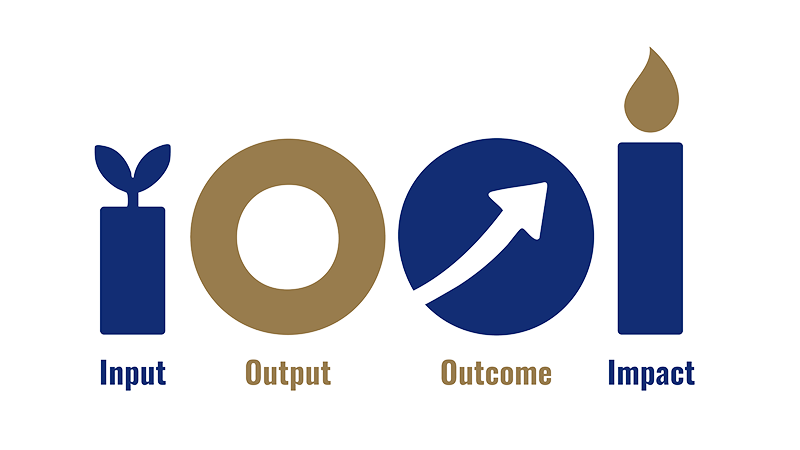
Tracking progress entails monitoring the inputs, outputs, and outcomes that are precursors to impact.

Input

Resources used to support our activities in education, research and partnerships, such as student intake and research grants

Output

The direct products from our activities, such as number of graduates and publications

Outcome

The short-to-medium-term consequential effects arising from outputs, such as employment rates and citation counts

Impact

The long-term, broader effect on a larger and more sustained scale

Together, they allow us to track progress and demonstrate the value of an initiative.  They form a 'results' or 'value' chain from input to ultimate economic and/or societal benefit.

Download the 
SMU 2030 Compendium

“We will continue to strengthen our DNA as an innovative and impactful university — to drive bold ideas and derive big impact.”

Professor Lily Kong
President

The new SMU Connexion (SMUC) building is located between SMU’s School of Accountancy and School of Law. The new building added 8,565.94 m² of teaching-and-learning space to SMU’s city campus.
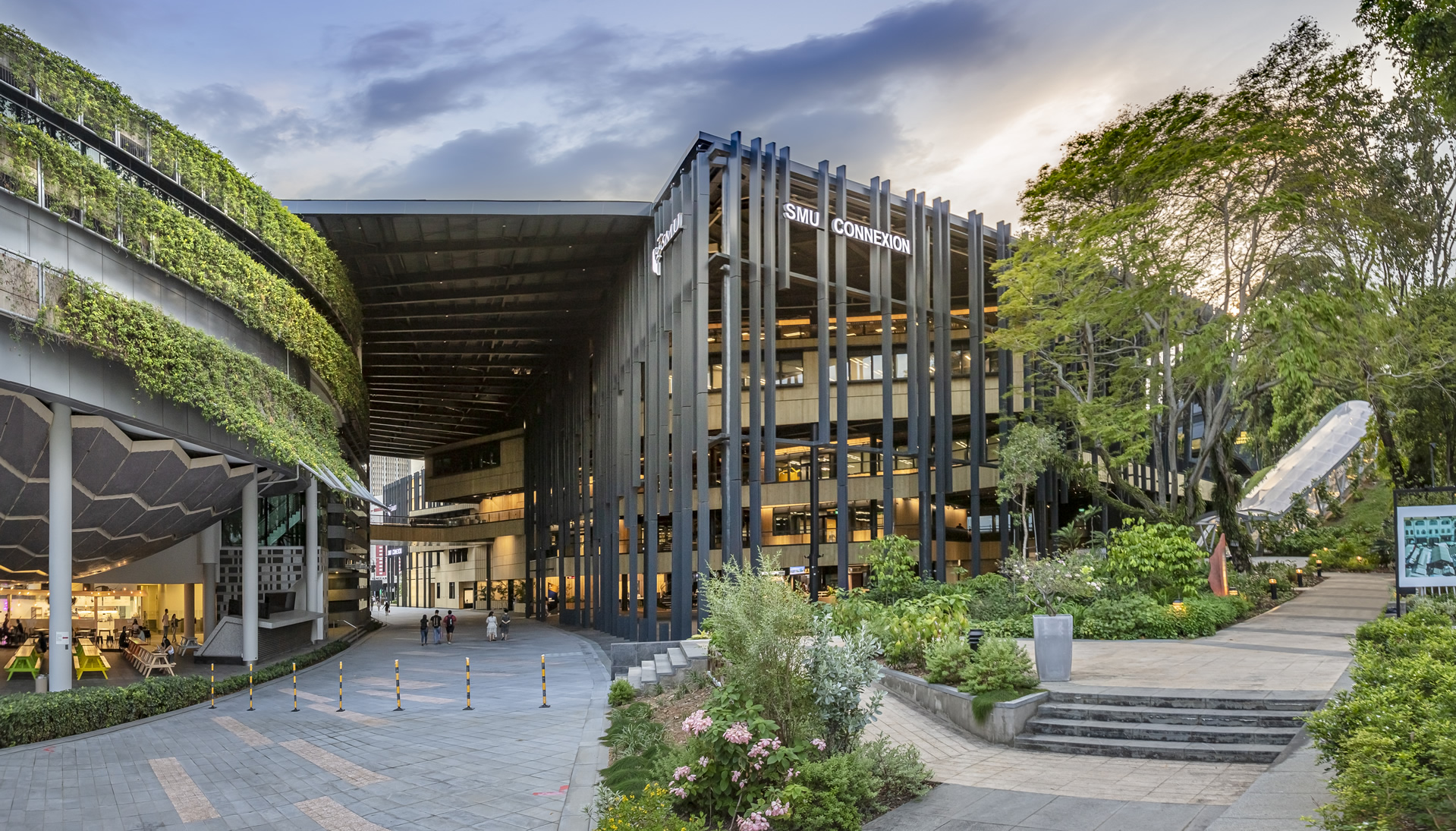
It enables seamless connectivity through the entire SMU city campus, as well as provides a sheltered link (aboveground and underground) from Bras Basah Road leading to Fort Canning and Armenian Street.

Besides enhancing convenience for the SMU community, it also benefits members of the public, who will have better access to the lush greenery at Fort Canning Park.

With some of the new building’s spaces and facilities being open 24/7, it also adds vibrancy to the Bras Basah precinct.

To support the University’s SMU-X pedagogy, which focuses on experiential learning through real-world projects, SMU Connexion building is designed to provide new-generation learning spaces that boast flexibility and future adaptability.

These include active learning classrooms, the bunks, collaborative zones, social pantry, jamming room, games lounge, integrated learning studios, makers space and student lounges.

The ample active learning spaces will enable students’ meetings with industry practitioners and faculty, as well as promote socialising.

About 500 m² will also be set aside as incubation spaces for start-ups to provide an environment that fosters innovation and entrepreneurship among SMU students and alumni.

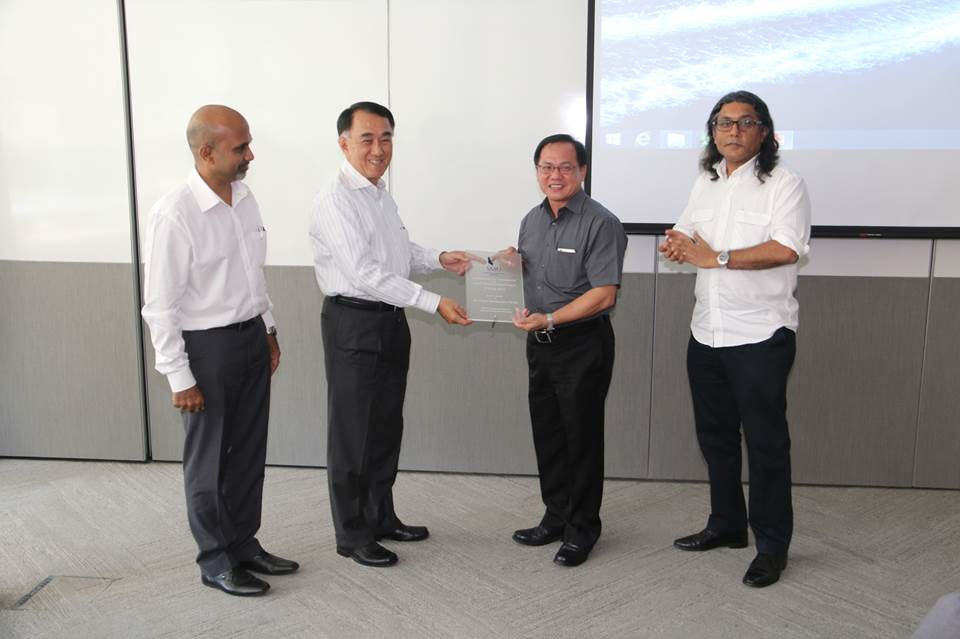
Contractors Award Ceremony

Overview

SMU is the only City Campus in Singapore and among very few in the world. It is in the heart of Singapore’s civic district. It provides a natural focal point and central gathering space for students, faculty as well as the public. 

There is a need to enliven the Campus through creative design and implementation of environmental features and activity-generating facilities to transform the SMU City Campus into a modern bustling central space for communal activity. And thus enhancement of Campus Green project through innovation, to create new spaces for SMU’s evolving teaching, learning & CCA needs took place with following goals and objectives:

  • Activate and create buzz on Campus Green using new design to promote and facilitate more outdoor activities for SMU community and public
  • Transform existing spaces into new trends of Teaching and Learning
  • Energize fitness and health spaces

The project was initially planned to be completed in 34 months. But after careful review of the functions of the facilities and through continuous effort on revising construction planning, the project is shortened to 20 months. This 20 months construction period is again divided in three phases to minimize impact on existing users who are using the facilities. After the project completed there will be addition in capacity of various facilities.

Campus Green Architecture, Design and Green Features

Campus Green

The layout and design of Campus Green will be enhanced to realise it's potential as the truly pulsating heartbeat of SMU. While preserving the existing view corridor between the National Museum and the Singapore Art Museum, activity-generating areas and infrastructure that support new lifestyle expectations, informal interaction and collaboration, as well as artistic expressions will be injected to Campus Green, while maintaining natural openness and part ambience.

Three key facilities - "The Curve" CCA area, an amphitheatre, and a fitness centre - to be introduced on Campus Green, will be primary activators that change the ground, through the day and night. Urban design features will make the SMU Campus Green active, comfortable and accessible. The development will further integrate SMU into the city and enable the University to further engage our various stakeholder groups in the larger community.

New Fitness Centre

The fitness centre will be enlarged and enhanced to meet the lifestyle habits of the millennial student, and to provide an experiential learning space to support SMU's sports curriculum. Stretching from the SMU Concourse in the basement to the Campus Green on the ground level, the Fitness Centre looks out to the heritage [correct?] Yes. Bodhi Tree and The Curve - enclosed yet feeling much like an 'outdoor' space. The Fitness Centre facade has also designed to support SMU's Greenmark Platinum status.

Creative Learning Spaces

Additional learning and teaching spaces will be created to alleviate the current space crunch and will support SMU's vision to provide transformative education for a new generation of graduates. Flexible event spaces, seminar rooms, and dedicated study areas for SMU students will inject a flow of life, ideas and knowledge into the SMU Concourse area below ground-level. These learning spaces are where new ideas are created and shared between students and faculty, and where critical thinking, collaboration and learning can take place.

Basement Concourse

SMU's basement Concourse provide a covered link to all facilities and buildings within the SMU campus in the city. Here, the introduction of a three-level fitness centre allows for the creation of new and vibrant nodal points. The design allows for the yoga, Pilates and Gymnasium (fitness centre) to be used even on weekends and will welcome more life and traffic flow in to the Concourse.

Milestones

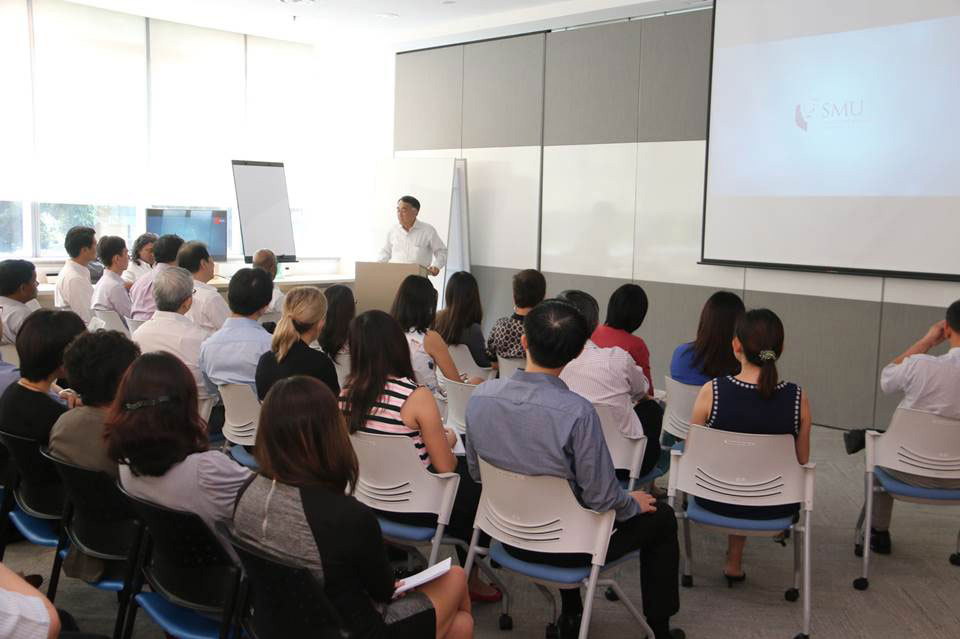
Media Presentation (15 May 2015)

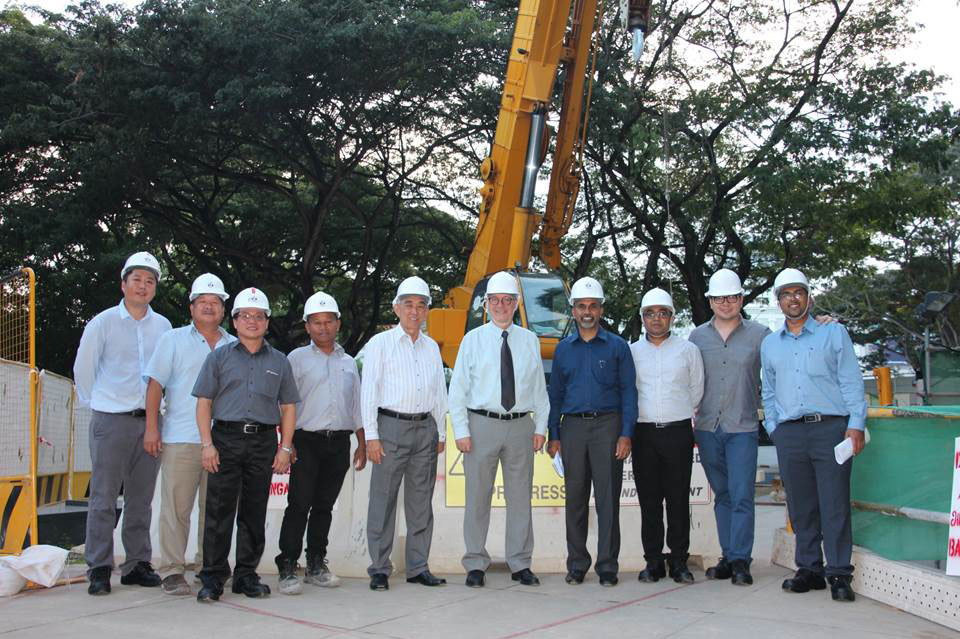
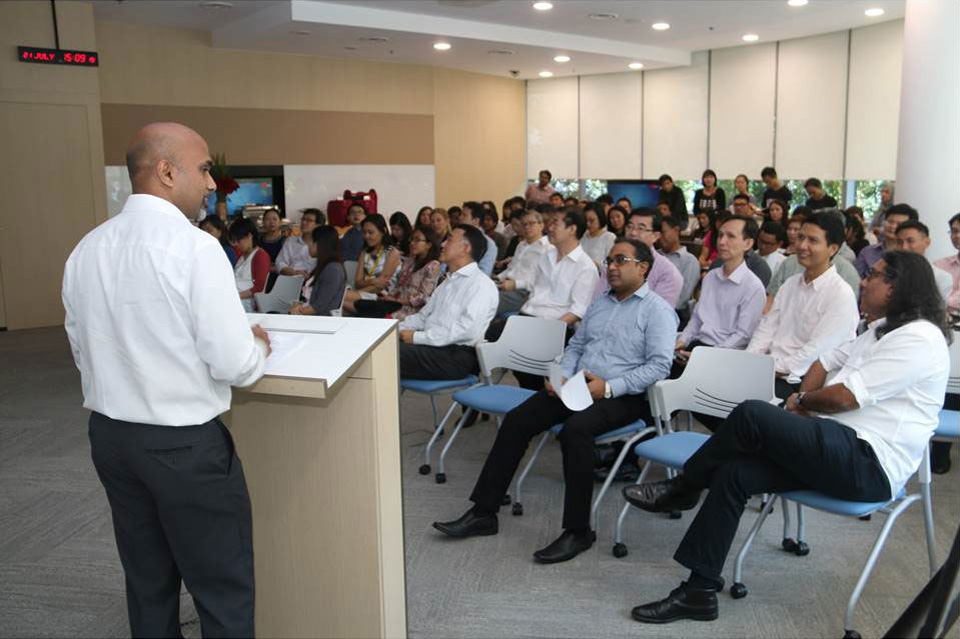
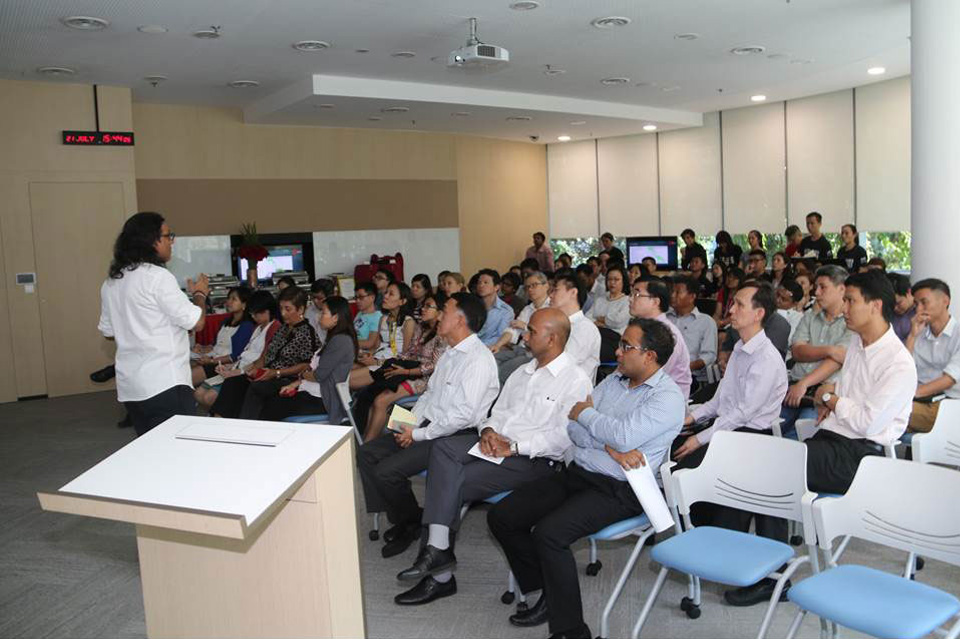
Tender Award Ceremony (21 July 2015)

Construction Stage

Amphitheater & CCA

Gymnassium and Fitness Center

Teaching & Learning at Phase 1

Teaching & Learning at Phase 3

Post Completion

Overview

Singapore Management University (SMU) broke ground on its new School of Law building on 20 January 2014. The new building will be a distinctive landmark that will contain state-of-the-art facilities used both to enrich the learning experience of SMU law students as well as involve others within the legal fraternity who are important stakeholders of the University.

Standing at the junction of Armenian Street and Canning Rise, the new 23,000-square-metre building - about the size of 52 basketball courts – will be ready by 2017. A key feature of the new building is the Kwa Geok Choo Law Library, named in memory of the late Madam Kwa Geok Choo, wife of former Prime Minister Lee Kuan Yew. The 2,200-square-metre Law Library will be fully equipped with modern technology wired for legal research in the 21st century. Also housed within the new building will be the David Marshall Moot Court, the SMU Pro Bono Centre, and other research centres.

The new School of Law building will nurture a greater sense of belonging and identity.

"Future generations of students of the SMU School of Law will have classes in this new building. Books will be read; friendships will be forged; eminent lawyers and leaders of the legal profession will be born. If, and when they look back on this day, they might wonder how the law school ever functioned without its own building."

(The Honourable Attorney-General Mr Steven Chong, S.C., who was the Guest of Honour at the ground-breaking ceremony held on 20 January 2014.)

The new building will foster closer ties among students, alumni and the law fraternity.

"SMU city campus already enjoys close proximity with the law courts, being less than a kilometre from the Supreme Court. We are also near the offices of many of our partners in the legal fraternity. The new building, with its inclusive facilities, will further promote these links and engagement as it will provide an ideal location for students, alumni and the fraternity to meet and interact… The project team and architects have also done a good job in incorporating design elements that will bring students and faculty closer to the lush nature that embraces the new building. These sustainable and inclusive design elements are an extension of the current SMU campus design, and stand true to the essence of SMU being both a global city university and integral part of the local environment and community."

The new building will inspire the next generation of lawyers.

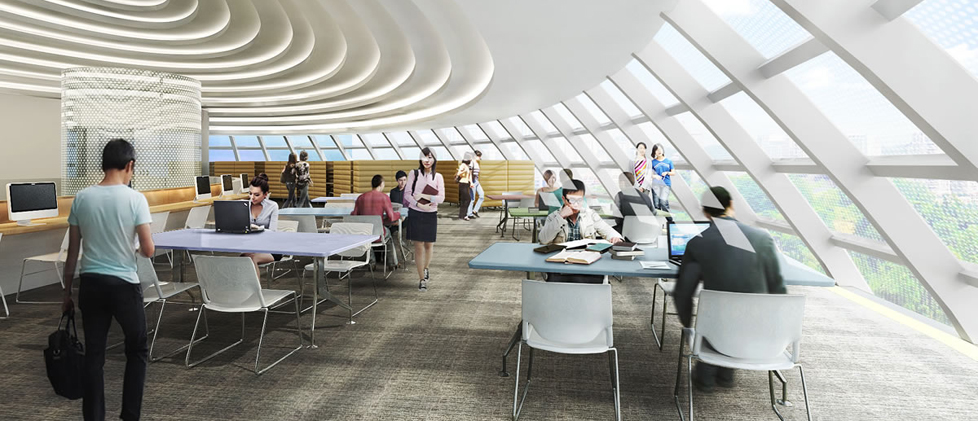
"We believe that the new School of Law building must have the power to inspire. In fact, the Kwa Geok Choo Law Library will be the inspirational heart of the School of Law. The library is strategically placed at the high point of the site next to Stamford Green and is expressed architecturally as a sculptural form to represent an ‘inspirational beacon’ that seeks to illuminate the lives of SMU’s law students. It will be symbolic of a ‘moral compass’ to remind students of the importance of dignity, truth and justice in society."

(Dean of SMU School of Law, Professor Yeo Tiong Min)

The SMU School of Law, which proudly welcomed its first cohort of 116 students in August 2007, now takes in about 180 students per year. The School will see its 10th intake of students and seventh batch of alumni in 2017, the year in which the new building is slated for completion.

The Architecture, Design and Green Features

Distinctive and eco-friendly in architecture and design

  • Designed by MKPL Architects Pte Ltd, the new building will be a symbol for inspirational learning. It will facilitate innovation in learning with flexible teaching spaces to support collaborative learning, inter-disciplinary work, intellectual exchange and social interaction. The architecture of the new building is deliberately contemporary in expression, while integrating with the architecture in the historical district in which it stands.
  • Designed to meet BCA’s Green Mark Platinum standards, the new building will boast many sustainable features that will bring about maximum energy savings. Through the implementation of passive design elements coupled with innovative green technologies, the building is designed to reduce energy consumption, whilst achieving the desired occupant comfort.
  • Some of the key ‘green’ features include a central atrium that promotes natural ventilation through the stack effect, a vertical green wall that will reduce the urban heat island effect, high-velocity low-speed fans that will bring about greater thermal comfort to non air- conditioned space, usage of green concrete that consumes less natural resources through material replacement, as well as a well-shaded external façade and a high-efficient central air-conditioning system to reduce energy consumption.

Creating a global City University of the 21st century

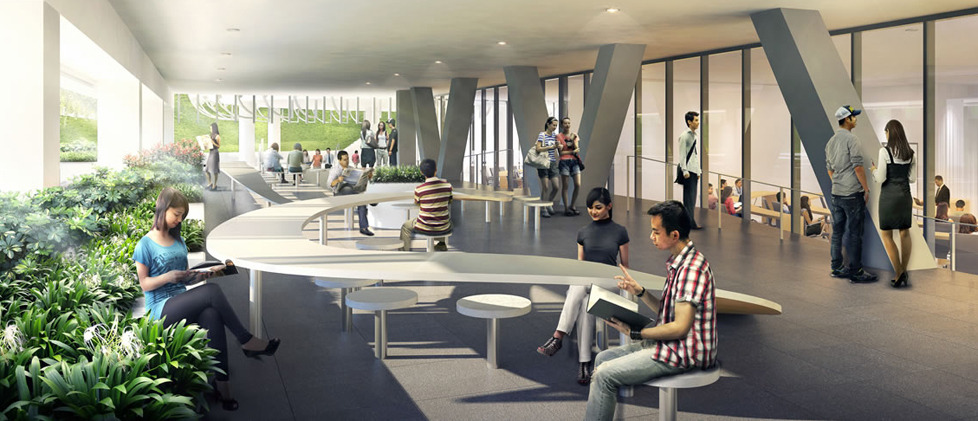
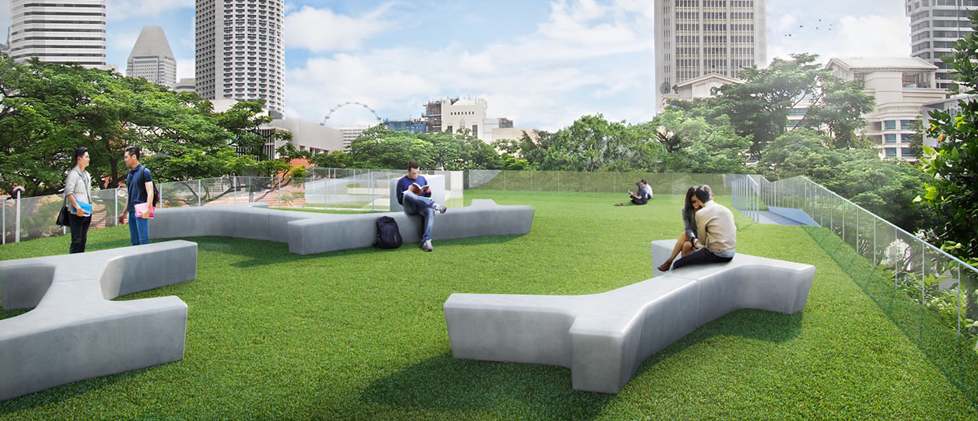
  • The new building will also contain a myriad of social and informal learning spaces in the form of a café and through the re-purposing of circulation spaces, which allow learning to take place virtually anywhere on campus. Another interesting feature of the new building is the ‘Student Commons’ located on the roof, which incorporates a mix of student club rooms and open-air terraces equipped with outdoor seating and social facilities.
  • The new building respects the urban fabric of the Civic District and builds upon the porosity of the city campus to further promote engagement with the community. For example, a 24/7 public pedestrian access is provided between Armenian Street and Stamford Green which will play a major role in linking up Fort Canning Park with this part of the city. Along this route, users are able to experience and catch interesting glimpses of the activities of the city campus through the Social Terrace and Activity Plaza. The building also blends in seamlessly with the existing Stamford Green to capitalise on the rare accessibility to open greenery within the Central Business District.

Kwa Geok Choo Law Library

  • The Kwa Geok Choo Law Library is named in memory of the late Madam Kwa Geok Choo, wife of former Prime Minister Lee Kuan Yew.

  • The 2,600-square-metre Law Library will have seating capacity for over 500 users, and will be fully equipped with modern technology and wired for legal research in the 21st century.

  • The Law Library will be a rich depository of knowledge resource and will provide comprehensive collection coverage to support the teaching and legal research needs of the SMU School of Law. It has the capacity to hold 50,000 print volumes. It will focus on developing several special collections on topics such as Commercial Law, Dispute Resolution and Islamic Law.

  • The Kwa Geok Choo Law Library and the Li Ka-Shing Library will together provide access to over 90,000 electronic resources, including e-books, e-journals and databases, catering for multidisciplinary research and interests. The two libraries will also provide seamless access to information services and resources to the entire SMU community.

Milestones

Ground Breaking Ceremony (20 January 2014)

Topping Out Ceremony

KGCLL Dome Structure Completion

Construction Stage (13 June 2014 - 12 December 2016)

Aerial View

Aerial View From the Junction of Armenian Street

Site Visits

School of Law Building Facilities

The Exterior

School of Law (Aerial view)

School of Law (Aerial view)

School of Law

School of Law
(View from Stamford Green)

Kwa Geok Choo Law Library 
(view from Stamford Green)

Kwa Geok Choo Law Library 
(view from Stamford Green)

Lower Roof

Lower Roof, School of Law

Graduate Study Lounge, Lower Roof

Level 5

Kwa Geok Choo Law Library, Level 5

Kwa Geok Choo Law Library, Level 5

Kwa Geok Choo Law Library, Level 5

Level 4

Kwa Geok Choo Law Library, Level 4

Kwa Geok Choo Law Library, Level 4

Kwa Geok Choo Law Library, Level 4

Function Lounge, Level 4

Sky Terrace (The Courtyard), Level 4

Level 3

Learning Commons 24-7, 
Kwa Geok Choo Law Library, Level 3

Learning Commons 24-7, 
Kwa Geok Choo Law Library, Level 3

Learning Commons 24-7, 
Kwa Geok Choo Law Library, Level 3

Kwa Geok Choo Law Library, Level 3

Kwa Geok Choo Law Library, Level 3

Group Study Room, Level 3

Seminar Room, Level 3

Seminar Room, Level 3

Group Study Room, Level 3

Level 1

David Marshall Moot Court, Level 1

David Marshall Moot Court, Level 1

David Marshall Moot Court, Level 1

David Marshall Moot Court, Level 1

Level B1

SMU Hall, Basement 1

SMU Hall, Basement 1

SMU Hall, Basement 1

100 Seater Seminar Room, Basement 1

Level B2

Meeting Room, Research Centre, Basement 2

Achievements & Important Events

Award Obtained

BCA Design and Engineering Safety Excellence Award – June 2017

SCDF Fire Safety Design Excellence Award – November 2017

BCA Green Mark Platinum Stage 1 Letter of Award – November 2017

Award Participation

BCA Construction Excellence Award – October 2017

URA/DSC President Design Award – October 2017

Important Events/Visits

Visit by CDAC Chairman in Nov 2016

Kajima Celebration Lunch on 16 Dec 2016

Visit by SMU President on 3 Jan 2017

Visit by Kwa Geok Choo Committee Group on 19 Jan 2017

SMU State of University Address 2017

Date: 8 September 2017
Addressed by: SMU President, Professor Arnoud De Meyer

Official Launch of SMU Pro Bono Centre

Date: 6 October 2017
Guest-of-Honor:
Mr Chan Sek Keong, former Chief Justice and current Senior Judge at the Singapore Supreme Court
Mr Tan Chong Huat, RHT Rajan Menon Foundation Chairman

Societal Leadership Summit 2017 (ASEAN50)

Date: 6 October 2017
Guest-of-Honor: Dr. Vivian Balakrishnan

A Central Base

The search for a permanent SMU campus began in 1998, to replace the temporary campus located at Bukit Timah.

As a management university, SMU needed a central location. Planners turned their focus to the Bras Basah area in the Central Business District, to leverage the synergy between SMU and Singapore's business community.
The district also has historical precedence – it was home to key educational institutions for over 150 years.

SMU's campus development in the heart of Singapore aligned with the government's commitment to business and education, and the Urban Redevelopment Authority's vision to develop the Bras Basah district.

On 5 December 1998, the government made a public announcement on the campus location. By June 2000, six architectural firms were shortlisted for the SMU Urban and Architectural Design Competition. Recognising the importance of involving the public in campus design in a central location, SMU held an exhibition of the shortlisted submissions to solicit feedback from the public.

Building In the City

The designers and builders of the campus faced some specific challenges. A primary one was that for the first time in Singapore, a building was being built right on top of the underground railway line - the existing North-South line and the new Circle Line (completed in 2010).

Architects also had to grapple with other extraneous factors, hurdles and restrictions in this area. They include construction of a road tunnel at Fort Canning, the realignment of Stamford Road and the existence of buried fibre-optic cables laid by telecommunications companies. There was even accommodation for an archaeological survey of the Bras Basah site to be carried out.

Alongside these considerations, there was immense effort to preserve the existing landscape and long-standing, mature trees.In an unprecedented tree-transplanting exercise, several mature trees in Bras Basah Park were uprooted and replanted, while other trees were conserved in their original location.

One noteworthy conservation effort was the transplanting of a 70-year old, full-canopy 21-metre rain tree, with a crown 25 metres in diameter and weighing more than 37 tonnes. The contractors also took special care with a venerable bodhi tree, a highly sensitive plant and a species particularly significant in Hindu and Buddhist cultures.
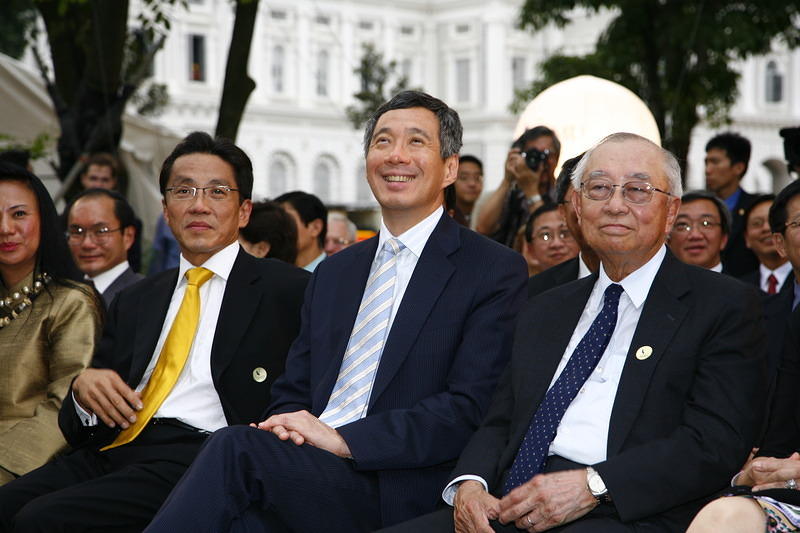
Singapore Prime Minister Lee Hsien Loong (Centre), with SMU Executive Chairman Mr Ho Kwon Ping (Left) and Dr Richard Hu, then SMU Chancellor (Right)

On 31 July 2005, the university symbolically moved into its new home, in time to start off the 2005/6 academic year. Prime Minister Lee Hsien Loong officially opened SMU's new and permanent campus on 20 January 2006.

The Next Chapter: Vision 2025

In 2015, SMU began a two-year development project to transform the landscape of the Civic District. With a vision to bring back the buzz and revive the ‘Bras Basah spirit’ through the SMU Campus Green, the project showcases the talent and vibrancy of the SMU campus and Singapore’s youth, to engage with the community.

Key features added to the SMU city campus include new seminar rooms; group study spaces; a centralised Co-Curricular Activities (CCA) space; an expanded, three-storey Fitness Centre; an outdoor jogging track on campus grounds, and a new amphitheatre on Campus Green that is a focal point of student and community-engagement activities.
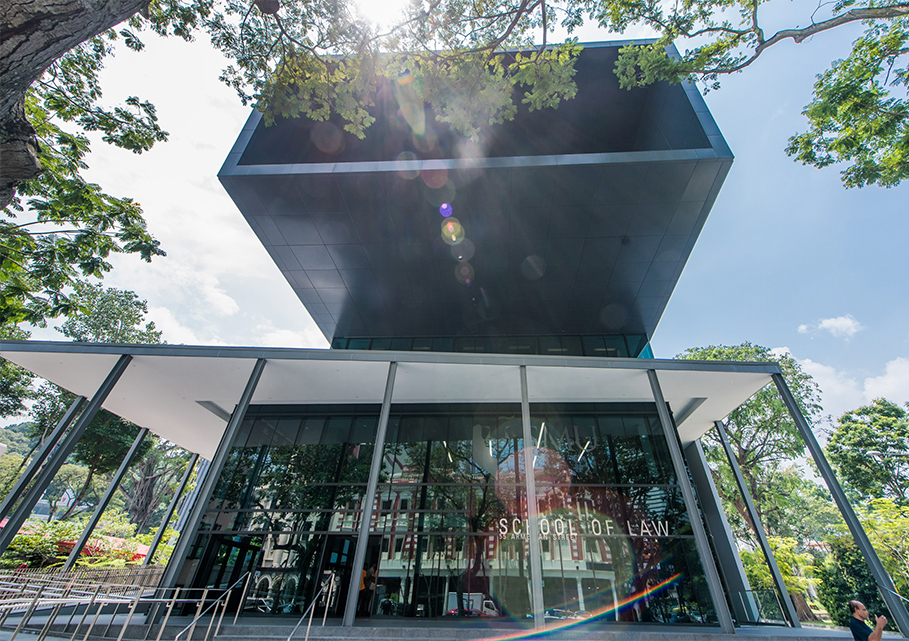
The School of Law facade
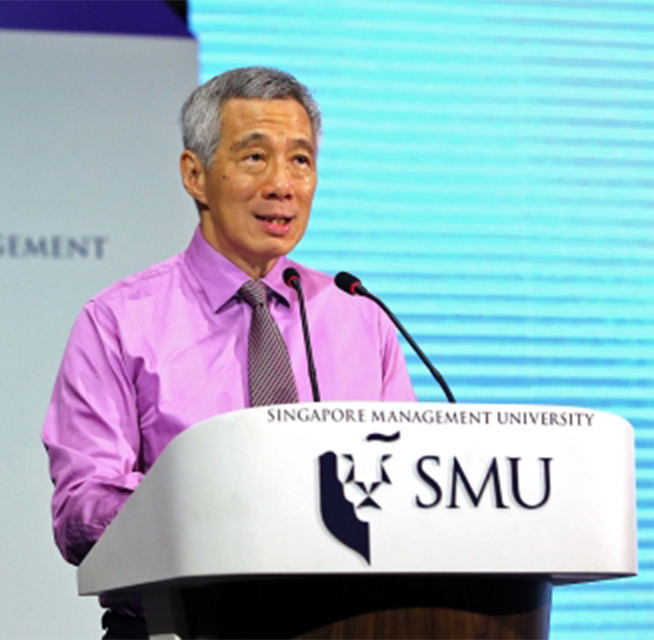
Singapore Prime Minister Lee Hsien Loong

In 2017, the new SMU School of Law building was launched, located at the open space between Armenian Street and Canning Rise. A key feature of new building is the Kwa Geok Choo Law Library, named in memory of the late Madam Kwa Geok Choo, wife of former Prime Minister Lee Kuan Yew. The Law Building also houses the David Marshall Moot Court, the SMU Pro Bono Centre and other research centres.

At the start of the academic year 2018/2019, SMU will introduce a new residential learning-and-living concept at its existing student residence – Prinsep Street Residences (PSR). At PSR, SMU aims to build a community for the Community, where students co-live, work and learn together, and are also nurtured to be change agents by giving back to the Bras Basah community.

SMU also plans to build a new SMU-X building to replace the building currently leased on Stamford Road.

The new building will utilise state-of-the-art technology in design and construction and potentially be the first zero-emission building in central Singapore.

The SMU campus is the first of its kind - purposefully designed, seamlessly integrated, and constructed in the heart of a fully developed cityscape.
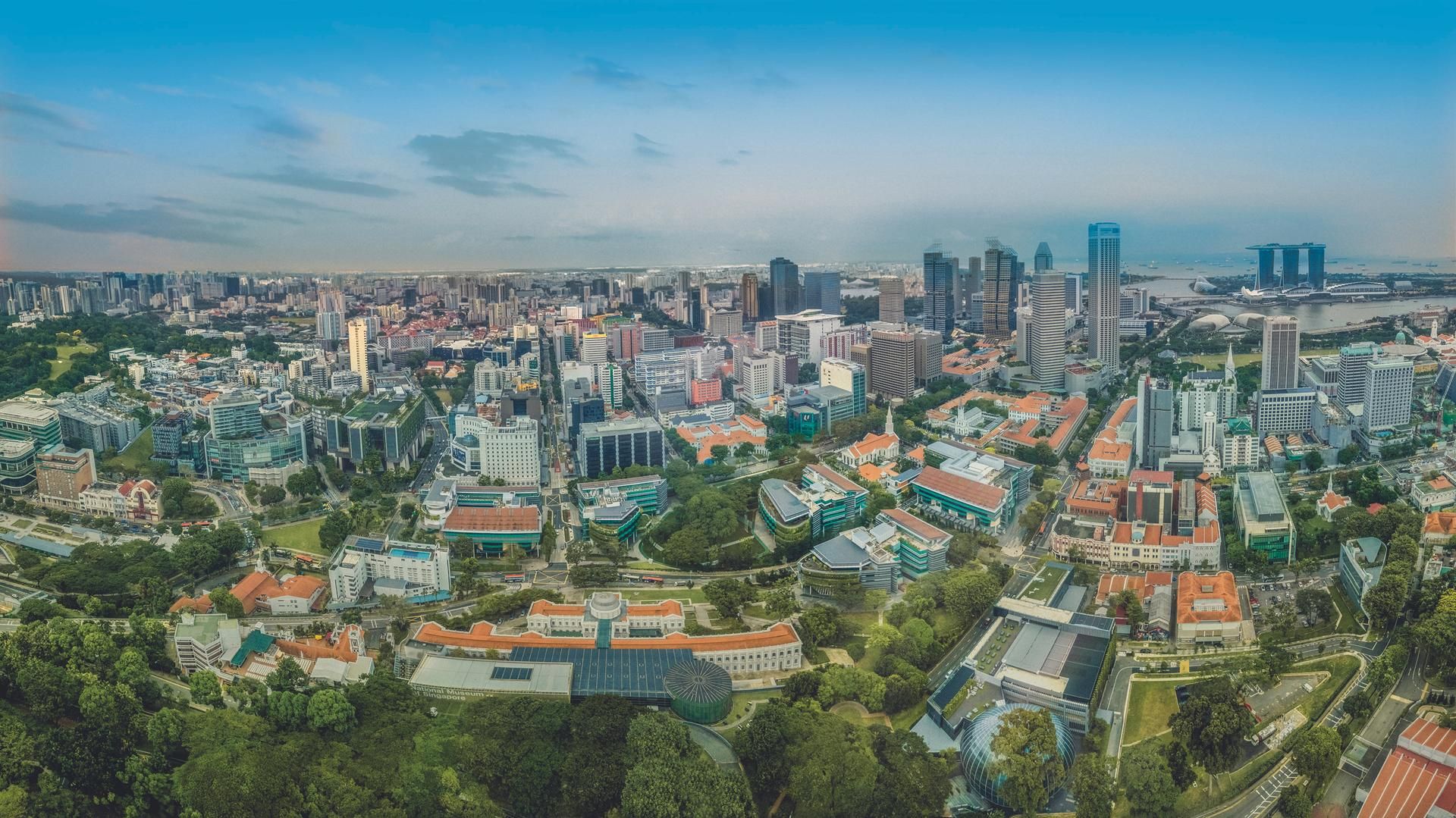
Built on 6.4 hectares of prime land in downtown Singapore, the campus is surrounded by a vibrant ecosystem of museums, theatres, educational institutions, art galleries, cafés, restaurants, and retail outlets, creating a dynamic and inspiring environment for learning and collaboration.

Its planning and development brought together a wide spectrum of professional, community, civic, and public groups. The vision was to create a modern city campus designed to meet the needs of a new millennium while preserving the rich heritage of this historic district.

Over the years, the campus has expanded to comprise eleven buildings. Six of these house SMU’s eight schools and colleges:

  • Lee Kong Chian School of Business
  • School of Accountancy
  • School of Economics
  • School of Social Sciences
  • School of Computing and Information Systems
  • Yong Pung How School of Law and the Kwa Geok Choo Law Library
  • College of Integrative Studies

The remaining four buildings are the Li Ka Shing Library, SMU Connexion, Administration Building, and Prinsep Street Residences (Student Hostel).

Our Campus Development Projects

The campus’ porous structures engage the surroundings with open courtyards and free-flowing walkways, integrating easily with the city’s activities. This design and structure reflects the character of SMU's innovative curriculum teaching style and inclusivity. Greenery is lush and prominent throughout – the buildings between Bras Basah and Stamford Roads are fringed by heritage trees, while the centralized landscape of the Campus Green and glazed facades are shaded by a veil of plants at each storey.

The SMU campus offers an open environment, with the ground floor of its buildings and the underground Concourse freely accessible to the public. Its many street-level linkages include a direct connection to the underground Bras Basah and Bencoolen train stations, both located beneath SMU's University Square.

For Students

There are different housing options available to students for your study here in Singapore. These can range from HDB (public housing), to condominium or landed houses (private housing) available for lease.  The rental prices, lease term and facilities provided can vary from one provider to another. Public housing would generally costs less than private housing, but prices would increase as the location gets closer to SMU, which is near the city centre. You can expect to pay more if you want to live near to SMU.

A number of estate agencies and portal companies also provide services to find accommodation. They normally charge a fee for their services. Do understand what are their charges and their services that they provide before engaging their services. You can refer to the following information and guides to help you make an informed choice before engaging a real estate agent if you should need one.

Council for Estate Agencies

Refer to the government website manging estate agencies for your knowledge before you decide if you need to engage one.

Rental in Singapore

Prevent Rental Scams

Familiarise yourself with the ways real estate rental scams can occur by reading the website below.

Disclaimers

  1. Please be aware that the information and contacts provided are not affiliated with SMU and do not indicate any endorsement by SMU. SMU does not assume any liability for these options. It is strongly recommended that you personally inspect the accommodations before making any commitments to ensure they meet your requirements.
  2. Any agreement signed between a Student and the Private Hostel Accommodation is deemed to be a private arrangement between the two parties. SMU is unable to mediate in the event of a dispute as it is a private matter between the student and the property owner. Students are advised to practice due care and diligence prior to any contractual commitments. In the event of a dispute, they may file an online case through Small Claims Tribunals at https://www.statecourts.gov.sg/CJTS/.

Alternative Housing Accommodation List

We have also put together a list of housing accommodation options for your consideration below.
Note: ​​​​​​​Students are advised to understand the terms and conditions of the lease agreement and refer to the information provided above before signing any contract or placing a deposit.
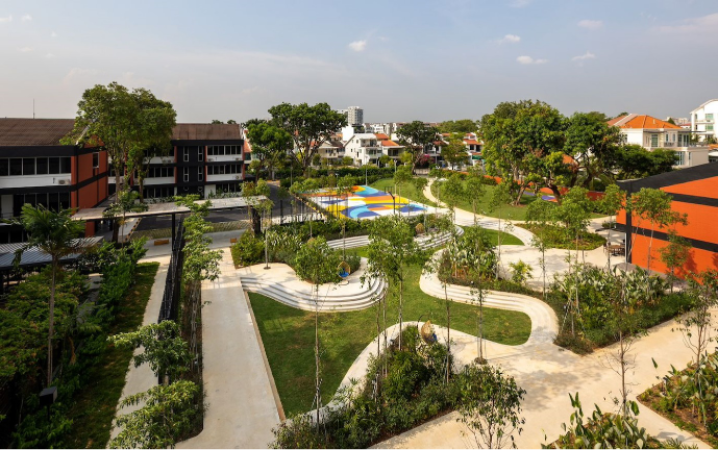
📍 Address: 116 Lorong J & 119 Lorong K Telok Kurau Singapore 425946 & 425760

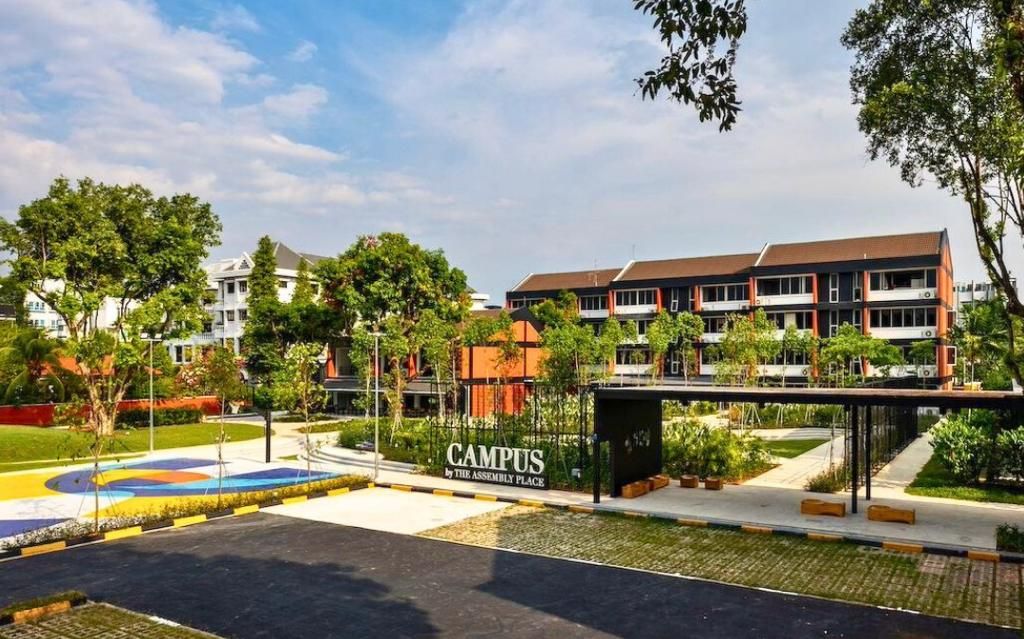
We are pleased to share that SMU has leased 30 beds from CAMPUS by The Assembly Place, which is newly constructed in late 2023 and conveniently located just 11 mins walk away from Kembangan MRT station (EW6) and 4 mins walk from nearest public bus stops. The hostel also has a free dedicated shuttle bus service with 4 different timings to ferry students to Paya Lebar MRT (EW8) 4 stops away from Bugis MRT station (10min walk to SMU), and 7 stops away from Bras Basah MRT (CC2).

CAMPUS by The Assembly Place is a fully dedicated student hostel accommodation where the occupants are student pass holders. This student centric environment offers a unique blend of comfort, safety, and community, where students can thrive freely with fellow students from other tertiary institutions. CAMPUS is among the rare accommodation providers in Singapore focused on providing student hostel accommodation environment at affordable prices, as many accommodation providers are now providing co-living spaces, which are priced higher and will house a myriad of different occupiers besides students.

The hostel grounds boast an impressive array of amenities and facilities, including:

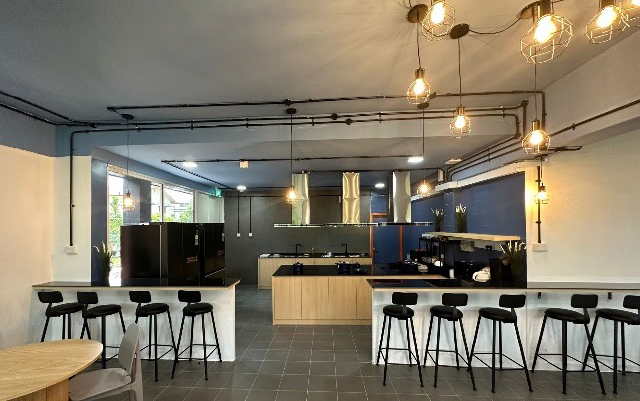
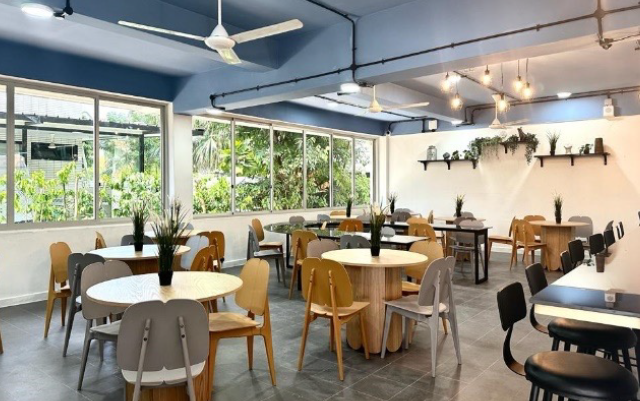
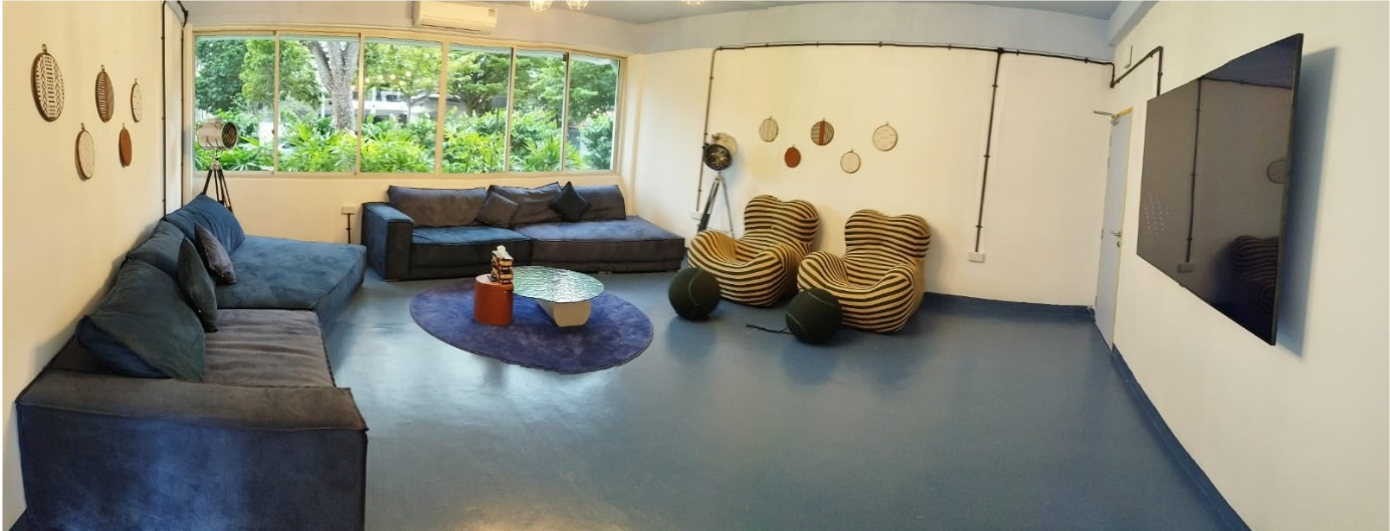
  • Social Kitchen and Communal Dining Area
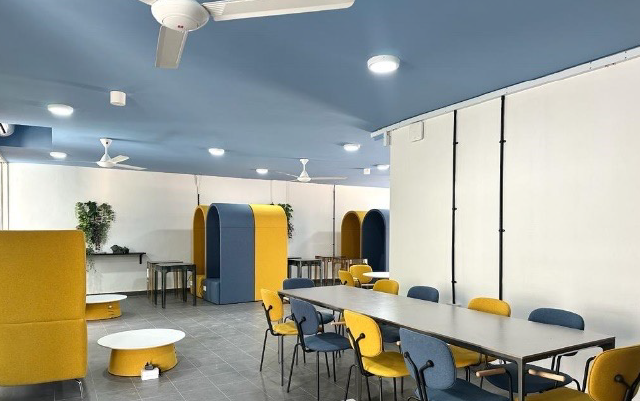
  • Co-Working Forest Lounge and Study Spaces
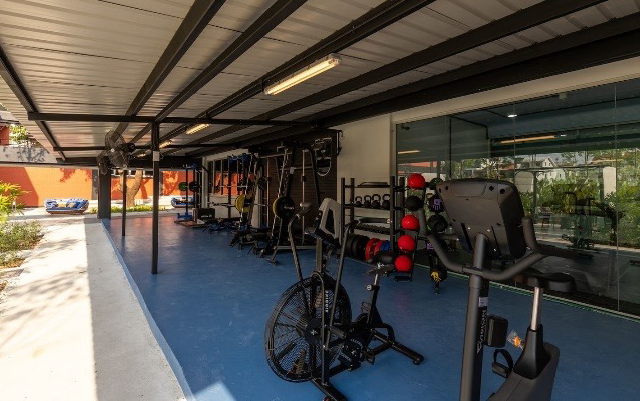
  • Gym and Outdoor Fitness Corner
  • Multi-Purpose Hard Court and Jogging Track
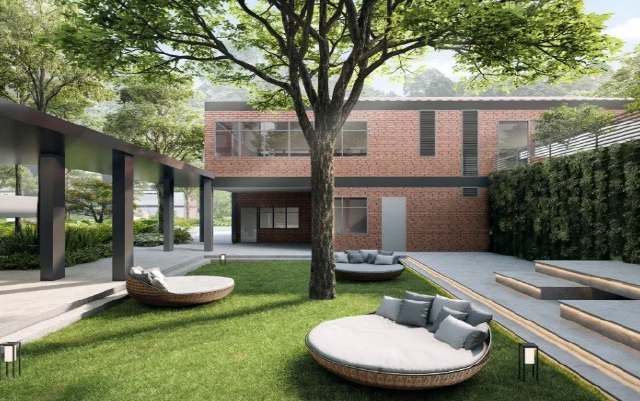
  • Relaxation Lawn and Wellness Garden
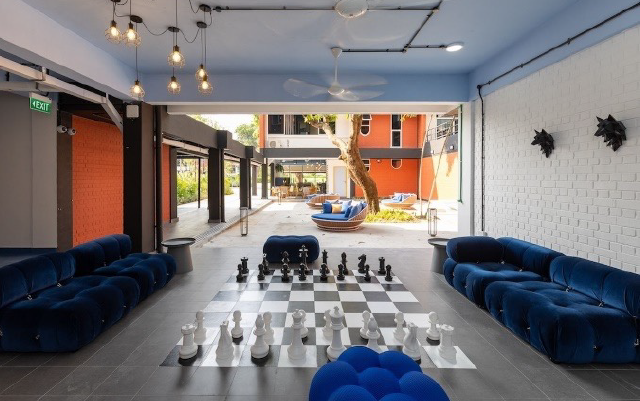
  • Herbs Garden, Chess Garden, and Swing Garden
  • Dash Track for high-intensity workouts

Location and Surrounding

Telok Kurau is a charming and laid-back district located in the East Coast of Singapore, nestled between Katong and Kembangan. This tranquil neighbourhood is steeped in history and rich cultural heritage, offering a unique blend of old-world charm and modern conveniences. With its picturesque streets, quaint shophouses, and lush green spaces, Telok Kurau exudes a warm and welcoming atmosphere, making it a beloved home for long-time residents and an attractive destination for visitors. Today, it is a thriving community with a mix of residential, commercial, and recreational areas, offering a relaxed and family-friendly lifestyle. Enjoy exploring the local eateries, cafes, and shops, or take a stroll along the nearby East Coast Park, which offers stunning views of the sea and a range of outdoor activities.
Accommodation Types

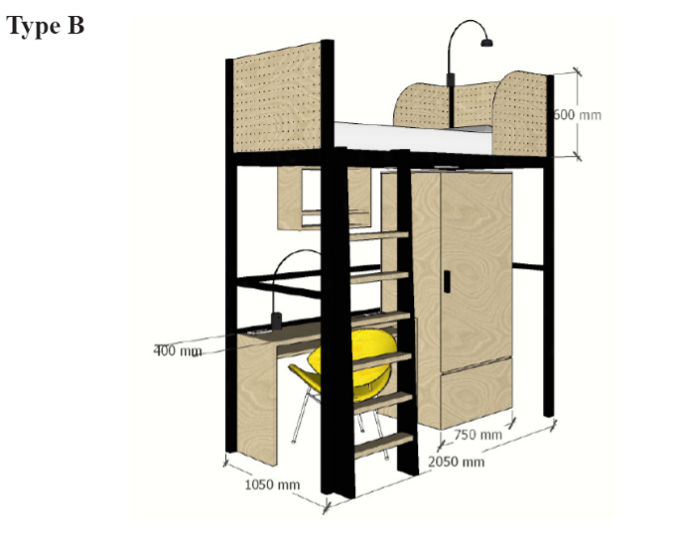
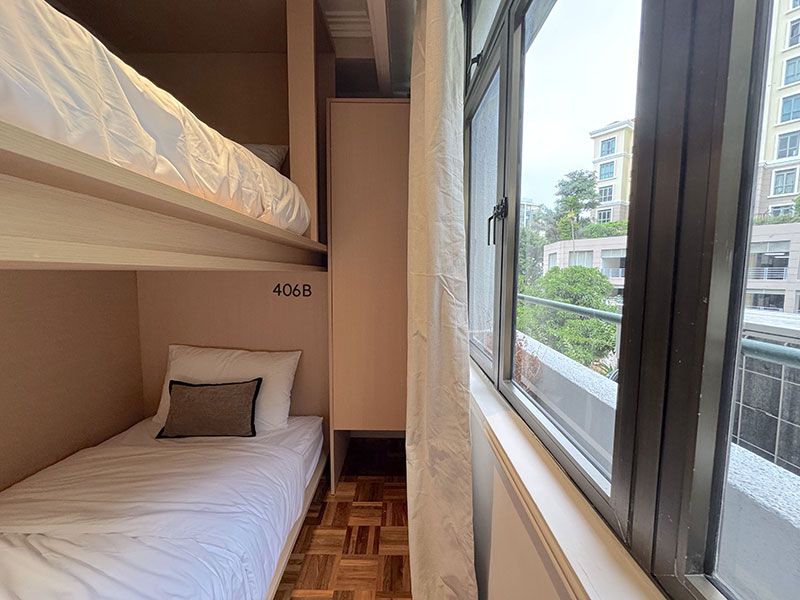
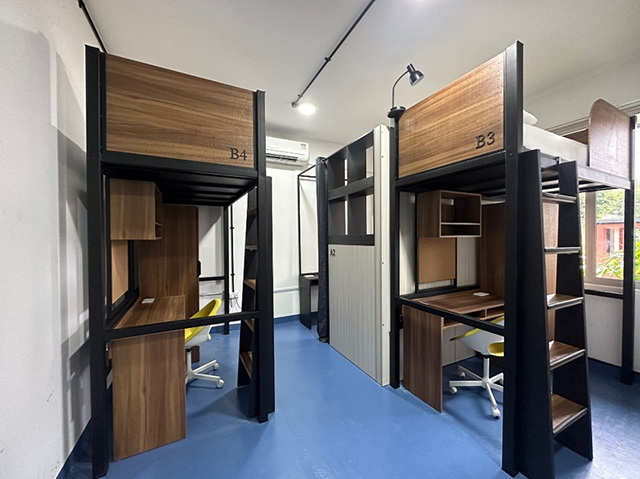
Bed Types - 3 Bedder – Type B (Loft Bed)

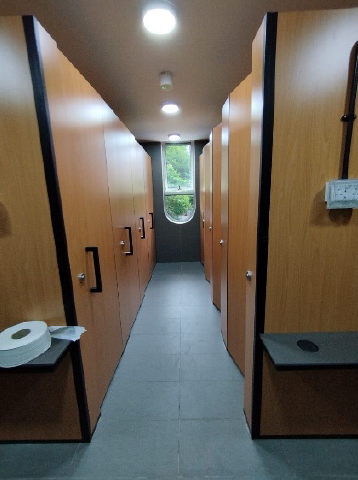
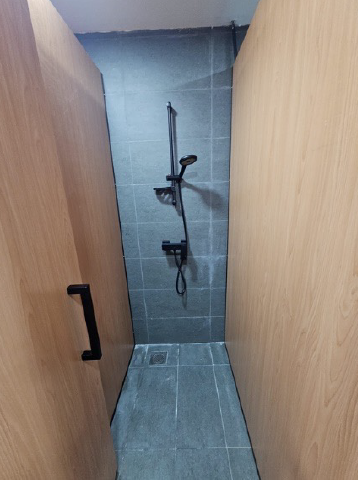
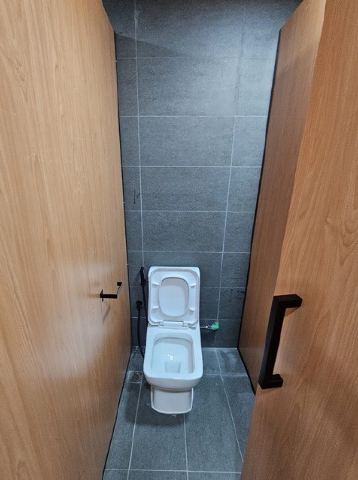
Communal Bathroom provided on each level

Facilities

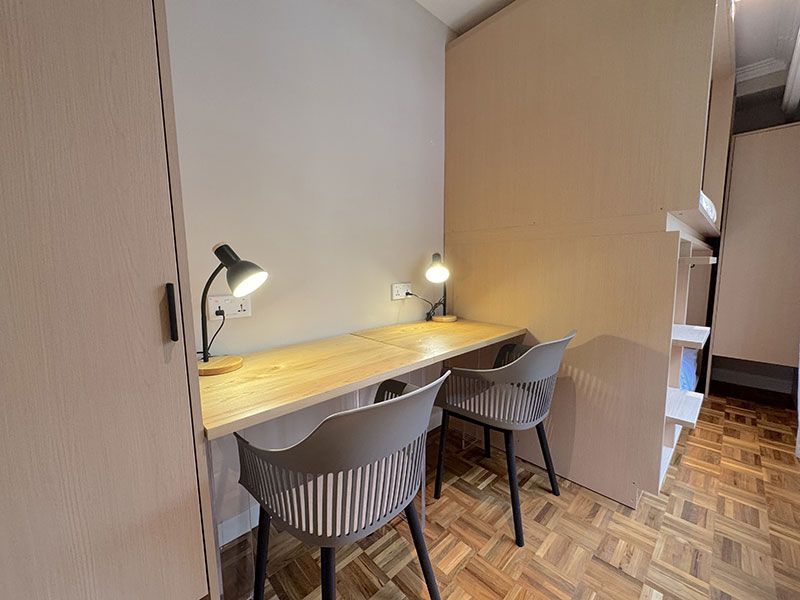
Communal Study Area

Chill-out Area

Dining Areas

Fitness Corner

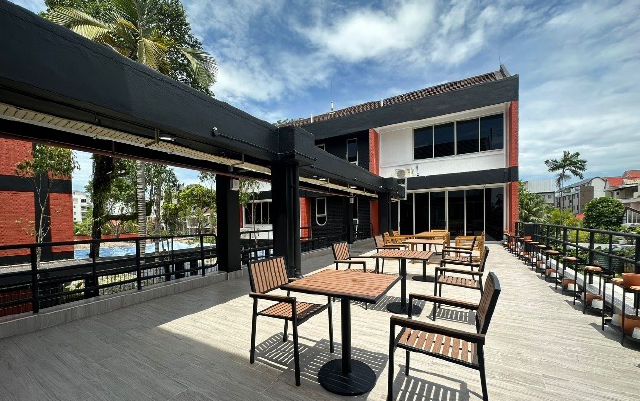
Outdoor Deck

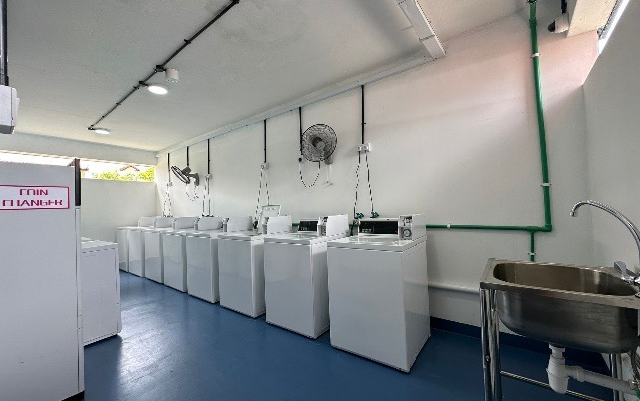
Commercial Laundromat Area

Green Breakaway Spaces

Karaoke and Activities Room

Accommodation Fees for SMU full-time Undergraduates Only

For the following periods:
Semester 1 & 2 stay (1 August 2026 to 30 April 2027) & full academic stay (1 August 2026 to 31 July 2027)

*Please check with Housing Office directly for the accommodation fees if you wish to apply for CAMPUS and not a full-time undergraduate.

To further assist students with accommodation, SMU has provided additional subsidies off the discounted contract rates This would be the final room rates full time undergraduate students need to pay when taking up CAMPUS By The Assembly Place.

Semester 1 & 2 Stay (01 Aug 2026 to 30 April 2027)

Room Type Room Rent Per Person Registration Fee
(Pay to Site Office)
Total
3 Bedder – Type B (Loft Bed)$7,740.00
$860 per month
$223.45 $7,963.45

Full Academic Stay (01 Aug 2026 to 31 July 2027)

Room Type Room Rent Per Person Registration Fee
(Pay to Site Office)
Total
3 Bedder – Type B (Loft Bed)$10,320.00
$860 per month
$223.45 $10,543.45

* All rates are quoted in Singapore dollars and inclusive of prevailing Goods and Services Tax. Rent would be paid directly to SMU, while the registration fee would be collected by the site office in cash only upon check-in.

* Do note that all applications for rooms must be done through SMU directly to enjoy the above rates. If you apply through Campus by The Assembly Place (external landlord) website, you will not be considered for any contract terms that we have negotiated as a group jointly under SMU. If in doubt, please contact us at smuhostel@smu.edu.sg before you make any booking.

Our rates Include:

  • Campus Wifi
  • Utilities^

  • CAMPUS facilities

  • Single Bed Mattress, Mattress Protector, Pillow, Pillow Cover

  • Shuttle Bus Services, 7-10am (Mon-Fri, excluding public holiday)

  • Weekly Room Housekeeping (Common Area Only)

^ To create a more sustainable living environment, there is an energy-saving initiative at CAMPUS For this, aircon timers would be installed in all rooms.


This initiative aims to:
✔️ Reduce unnecessary energy consumption 
✔️ Prevent condensation issues caused by prolonged aircon use 
✔️ Ensure a more balanced and comfortable indoor climate. 

The aircon in your room will automatically turn off and cannot be switched on during the following intervals:

🗓️ Monday - Friday weekdays only including  public holidays
🕙 10 AM – 12 PM
 

Points to note regarding the accommodation:

  • There are no visitors allowed unless under special circumstances and arrangements.
  • You will likely be living with other students in the same apartment as SMU is unable to rent the whole apartment solely for SMU students.
  • Once the Housing Fees are posted into your OASIS account, you will be given 7 days to make payment to avoid undesirable actions, such as Hostel Administration Hold, taken by SMU. The Hostel Administration Hold would restrict your access to any course bidding, viewing of grades, collection of transcript and etc.

How to Apply

We accept applications from undergraduates (full-time SMU students) and all other students (PhD or Masters) who have accepted the offer to study full time at SMU. Priority would be granted to full time undergraduates due to their length of study in SMU. 

The allocation of rooms is at the discretion of the University and subject to the disposition and needs of applicants. Allocations will result in students of various age and cultural backgrounds being accommodated together in shared units, a reflection of SMU’s diverse student population. 

Changing of rooms will not be allowed.

Students who are interested to stay for AY2026/27 can fill in and submit the application (e-Form) on Friday , 29 May 2026 at 9am (Singapore time) via the following link:

Do note that all applications for rooms have to be done through SMU directly in order to be valid. If you apply through The Assembly Place (external landlord) website, you will not be considered for any contract terms that we have negotiated as a group jointly under SMU. If in doubt please contact us at smuhostel@smu.edu.sg before you make any booking.

Application Processing

Applications will be processed on a first-come-first-serve basis and will close once all the beds are taken up. Any applications received before the application start date and time would not be considered, so students are advised to adhere strictly to the timing.

If you apply before the application start date stated above, your first application will be invalid and you will need to apply again. If you applied after the start date stated above, your application will only be considered if there are still vacant beds available.

Application Results and Acceptance

Successful applicants will be informed of their application results and room allocations only via email. Successful applicants are able to move in from :

  • Semester 1 - 1 August 2026
  • Semester 2 - 1 January 2027

* No early check-in before the move-in dates stated above is allowed.

Unsuccessful applicants will be placed on a waiting list and any allocations will be given based on any withdrawal or cancellation. However, being placed on the waiting list does not guarantee an offer of accommodation.

Note to All Applications

  1. Submission of applications does not guarantee an offer of accommodation.
  2. The mode of payment is via Telegraphic/Bank Transfer only. A copy of the completed transaction slip or email notification from the bank for the payment made shall be returned to smuhostel@smu.edu.sg by the date stated in the Letter of Offer, in order for your bed to be reserved successfully.
  3. Confirmation: Successful applicants are required to pay the advance payment amount stated when they receive the letter of offers for their stay. We would only confirm your accommodation upon receipt of full payment.
  4. Administrative Fee: Successful applicants must make a separate payment of S$223.45 (inclusive of GST) Administrative Fee to the site administration staff during check-in.
  5. Pre-termination of stay: Successful applicant is expected to remain in residence for the time specified in the agreement once an allocation of the accommodation has been assigned to and accepted by him/her. No pre-termination of stay is allowed except for exceptional circumstances such as withdrawal of course from SMU.

Payment Options

  1. Payment in person
    Payment can be made at the new Student Services Hub located at 70 Stamford Road #B1-36 (opposite Dental@Uni), from Mondays to Fridays (excluding public holidays), 10am to 5pm.:
    • Debit/Credit Card (VISA/Mastercard) in person
    • NETs or credit/debit card in person
  2. Online Credit/Debit Card Payment via Student Self-Service Page

Leasing Business / Housing Office

Email address for all applications and  enquiries - smuhostel@smu.edu.sg

Housing Office number - 6336 5621 / 6336 5262

CAMPUS by The Assembly Place

Address - 116 Lorong J and 119 Lorong K Telok Kurau
Singapore 425946 & 425760

View the location of CAMPUS by The Assembly Place on Google Maps.

Welcome to Keystone Clarke Quay – Your Ideal Student Accommodation in the Heart of Singapore

📍 Address: 257 River Valley Road (S) 238306

We are excited to share that SMU has leased 44 beds at Keystone Clarke Quay, a service apartment-style property which is conveniently located at River Valley Road which is just a 7-minute walk away from Fort Canning MRT station (DT20) and 3 minutes walk from the nearest public bus stop (B13101).

Located at 257 River Valley Road, Singapore 238306, Keystone Clarke Quay offers a perfect blend of comfort, convenience, and community for students seeking a home away from home. Nestled in one of Singapore’s most vibrant neighbourhoods, our residence provides an exceptional living experience tailored to meet the needs of modern student life.

A Comfortable and Supportive Living Space

Keystone Clarke Quay features seven well-appointed, cosy bedrooms, designed to provide a peaceful retreat after a busy day of studies. Each room is thoughtfully furnished to ensure comfort and functionality, allowing residents to relax and recharge in a private, personal space.

Beyond the bedrooms, our residence fosters a warm and social atmosphere with shared communal areas, including:

A spacious dining room – perfect for shared meals and group study sessions.
A fully equipped kitchen – allowing residents to prepare home-cooked meals with ease.
These shared spaces are designed to encourage interaction, collaboration, and a sense of belonging, making Keystone Clarke Quay more than just a place to stay—it’s a thriving student community.

Location and Surroundings

Prime Location with Unbeatable Convenience

One of the standout advantages of living at Keystone Clarke Quay is its central location, putting you within easy reach of Singapore Management University (SMU) lifestyle hubs and a wide range of amenities.

Excellent Transport Links
  • Just a 7-minute walk to Fort Canning MRT Station (DT20), connecting you seamlessly to the Downtown Line.
  • Only 3 minutes away from the public bus stop (13101), offering multiple routes across the city.
Quick Commute
  • Reach SMU in under 30 minutes from the accommodation.
Vibrant Neighbourhood
  • Situated near Clarke Quay, residents enjoy a lively social scene with an array of dining, shopping, and entertainment options.
  • Close to Fort Canning Park, providing a serene escape for outdoor relaxation and recreation

Why Choose Keystone Clarke Quay?

  • Affordable, all-inclusive living with transparent pricing.
  • Safe and secure environment in a well-maintained property.
  • Friendly and supportive community of like-minded students.
  • Proximity to SMU, public transport, and lifestyle amenities

Bed Types

Twin Sharing
 

Single Small
 

Single Ensuite

(comes with attached bathroom)

Twin Sharing Ensuite

*There are 4 twin sharing ensuite rooms , one in each apartment which has a tight bedroom space of 7.96sqm and low headroom space.  These 4 bedrooms would be equipped with ensuite toilet to supplement the smaller bedroom space available and enhance the overall accommodation space.
Twin Sharing Ensuite

Common Spaces

Living Room

Shared Toilet 1

Shared Toilet 2

Ensuite Toilet

Kitchen + Laundry Area

Dryer + Iron

Kitchen Essentials

Accommodation Fees Summary

Below are the room rates and total accommodation fees that all SMU students would have to pay when renting a bed from Keystone Clarke Quay applied through SMU.

For the following periods:

Semester 1 & 2 Stay (01 Aug 2026 to 30 April 2027)

Room Type Room Rent Per Person Occupation Security Deposit
(Refundable and to pay to site office)
Registration Fee
(Pay to Site Office)
Total
Single Small$12,600.00
$1,400.00 / month
$1,500.00$200.00$14,300.00
Single Ensuite$13,950.00
$1,550.00 / month
$1,500.00$200.00$15,650.00
Twin Sharing and 
Twin Sharing Ensuite
$8,550.00.00
$950.00 / month
$1,500.00$200.00$10,250.00

Full Academic Stay (01 Aug 2026 to 31 July 2027)

Room TypeRoom Rent Per Person Occupation Security Deposit
(Refundable and to pay to site office)
Registration Fee
(Pay to Site Office)
Total
Single Small$16,800.00
$1,400.00 / month
$1,500.00$200.00$18,500.00
Single Ensuite$18,600.00
$1,550.00 / month
$1,500.00$200.00$20,300.00
Twin Sharing and 
Twin Sharing Ensuite
$11,400.00
$950.00 / month
$1,500.00$200.00$13,100.00
For utilities, if it exceeds $700 per month in total for all the residents staying at the same level, the excess would be equally divided amongst the residents of that level. Otherwise, the utility charges are being covered in the rent you pay. Should there be a need in the future, Landlord will install aircon timer system with scheduled aircon hours if needed.

* All rates are quoted in Singapore dollars and inclusive of prevailing Goods and Services Tax. Rent would be paid directly to SMU, while the registration fee would be collected by the site office in cash only upon check-in. 

Do note that all applications for rooms must be done through SMU directly to enjoy the above rates. If you apply through Homestead Group (external landlord) website, you will not be considered for any contract terms that we have negotiated as a group jointly under SMU. If in doubt, please contact us at smuhostel@smu.edu.sg before you make any booking.

Our rates Include:

  • Wifi

  • Utilities (subject to a usage cap of $700 per level)

  • Every room includes a desk , a chair and a wardrobe, an air-conditioner, an external window

  • Common area facilities that include television, washing machine, dryer, dining lounge, ironing board, iron, hair dryers

  • Single Bed Mattress, Mattress Protector, Pillow, Pillow Cover

  • Weekly Housekeeping of common areas and washrooms plus washing of bed linen

  • An inclusive set of Blanket and Bed Linens 

  • Communal Kitchenware: Refrigerator, Microwave, basic kitchen supplies (cutlery, plates), kettle, hot plate

How to Apply

We accept applications from undergraduates (full-time SMU students) and all other students (PhD or Masters) who have accepted the offer to study full time at SMU. Priority would be granted to full time undergraduates due to their length of study in SMU.

The allocation of rooms is at the discretion of the University and subject to the disposition and needs of applicants. Allocations will result in students of various age and cultural backgrounds being accommodated together in shared units, a reflection of SMU’s diverse student population. 

Changing of rooms will not be allowed.

Students who are interested to stay for AY2026/27 can fill in and submit the application (e-Form) on Friday , 29 May 2026 at 9am (Singapore time) via the following link:

Do note that all applications for rooms have to be done through SMU directly in order to be valid. If you apply through The Assembly Place (external landlord) website, you will not be considered for any contract terms that we have negotiated as a group jointly under SMU. If in doubt please contact us at smuhostel@smu.edu.sg before you make any booking.

Application Processing

Applications will be processed on a first-come-first-serve basis and will close once all the beds are taken up. Any applications received before the application start date and time would not be considered, so students are advised to adhere strictly to the timing.

If you apply before the application start date stated above, your first application will be invalid and you will need to apply again. If you applied after the start date stated above, your application will only be considered if there are still vacant beds available.

Application Results and Acceptance

Successful applicants will be informed of their application results and room allocations only via email. Successful applicants are able to move in from :

  • Semester 1 - 1 August 2026
  • Semester 2 - 1 January 2027

* No early check-in before the move-in dates stated above is allowed.

Unsuccessful applicants will be placed on a waiting list and any allocations will be given based on any withdrawal or cancellation. However, being placed on the waiting list does not guarantee an offer of accommodation.

Note to All Applications

  1. Submission of applications does not guarantee an offer of accommodation.
  2. The mode of payment is via Telegraphic/Bank Transfer only. A copy of the completed transaction slip or email notification from the bank for the payment made shall be returned to smuhostel@smu.edu.sg by the date stated in the Letter of Offer, in order for your bed to be reserved successfully.
  3. Confirmation: Successful applicants are required to pay the advance payment amount stated when they receive the letter of offers for their stay. We would only confirm your accommodation upon receipt of full payment.
  4. Administrative Fee: Successful applicants must make a separate payment of $1,500 security deposit (refundable) and a one-time S$200 Administrative Fee to the site administration staff during check-in.
  5. Pre-termination of stay: Successful applicant is expected to remain in residence for the time specified in the agreement once an allocation of the accommodation has been assigned to and accepted by him/her. No pre-termination of stay is allowed except for exceptional circumstances such as withdrawal of course from SMU.

Payment Options

  1. Payment in person
    Payment can be made at the new Student Services Hub located at 70 Stamford Road #B1-36 (opposite Dental@Uni), from Mondays to Fridays (excluding public holidays), 10am to 5pm.:
    • Debit/Credit Card (VISA/Mastercard) in person
    • NETs or credit/debit card in person
  2. Online Credit/Debit Card Payment via Student Self-Service Page

Leasing Business / Housing Office

Email address for all applications and  enquiries - smuhostel@smu.edu.sg

Housing Office number - 6336 5621 / 6336 5262

Keystone Clarke Quay

Address - 257 River Valley Road
Singapore 238306


View the location of Keystone Clarke Quay on Google Maps.

Subscribe to