

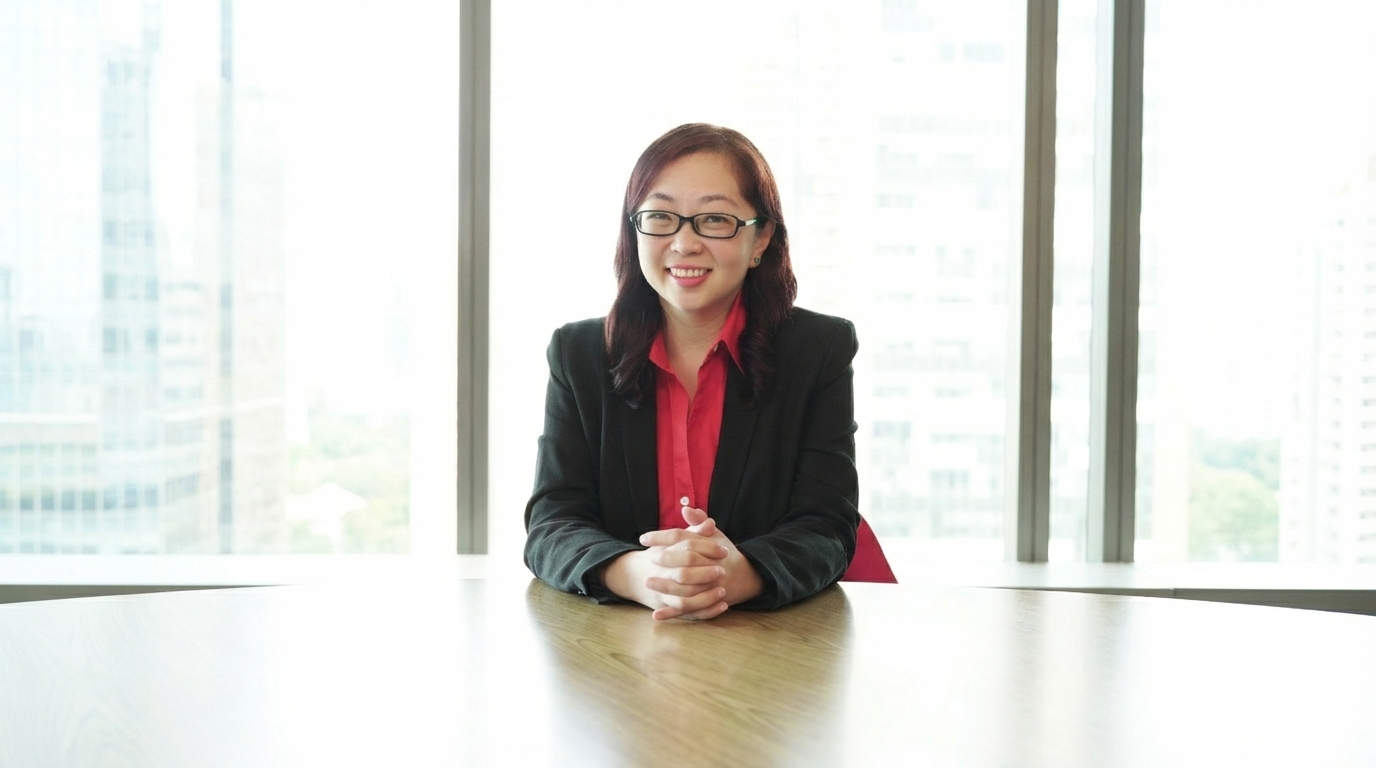
The art of pacing and intentional disruption
SMU alumna, member of the SMU IAC Indonesia, member of the SMU Board of Trustees, Lim Kexin shares how purposeful pacing, agility and community leadership shaped her transformative career journey from pioneering Accountancy graduate to trusted business advisor.
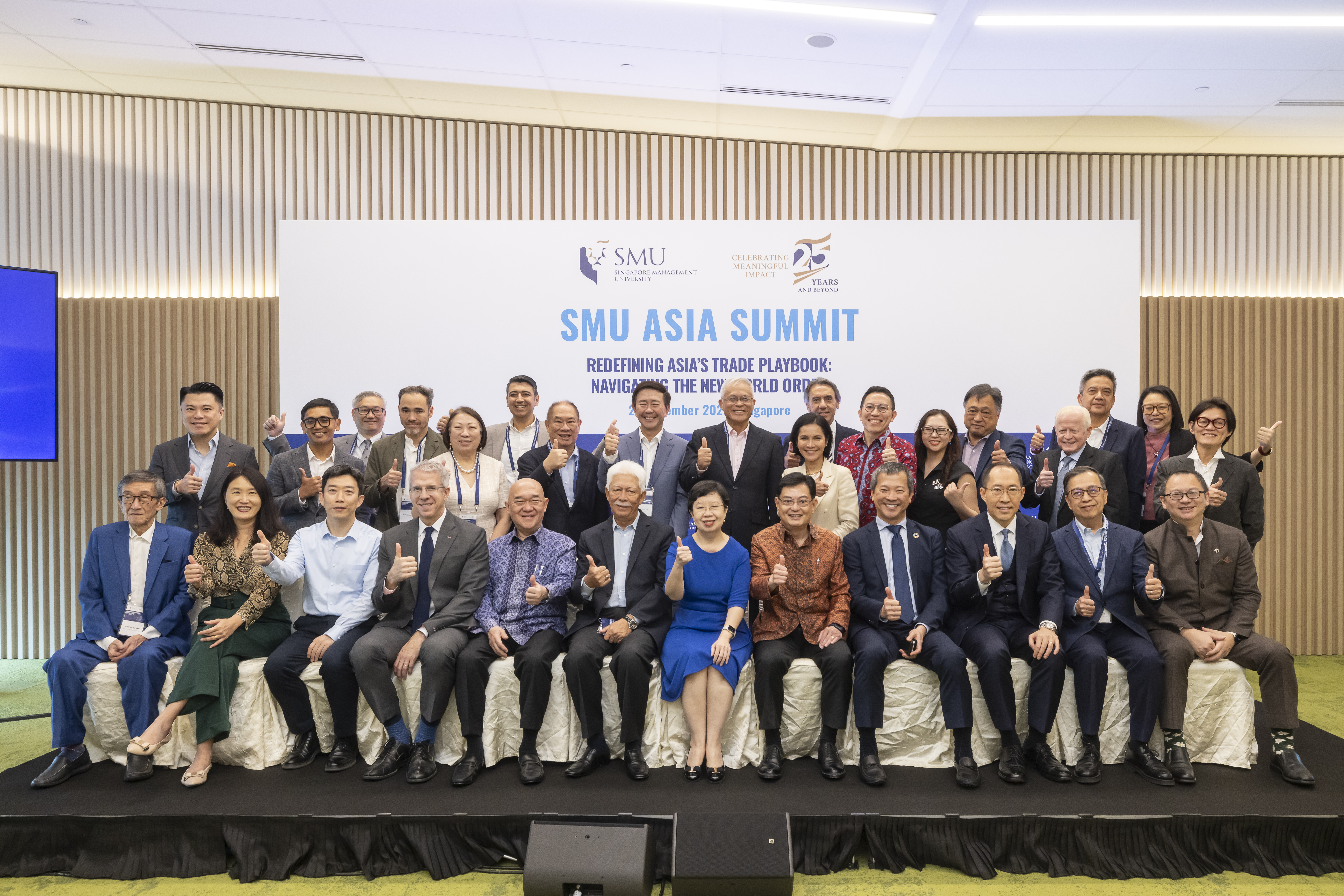
Redefining Asia's Trade Playbook: Navigating The New World Order
The biennial SMU Asia Summit returned to SMU’s city campus in Singapore on 20 November 2025, bringing together close to 75 SMU International Advisory Council chairs and members, members of SMU’s Board of Trustees, SMU senior management and faculty, and special guests. As a platform for regional knowledge exchange, the Summit convened leaders to reflect on the forces reshaping Asia’s economic landscape and the strategic decisions required for long-term resilience and opportunity.
Looking ahead, SMU will soon establish its India International Advisory Council (IAC), to be chaired by Mr Uday Kotak, Founder and Director of Kotak Mahindra Bank. This will be the University’s eighth IAC globally, joining existing councils across Asia that comprise distinguished industry leaders who advise the University on strategy and regional engagement. Prof Kong also announced that SMU will open its fourth overseas centre in Shenzhen, China, while continuing to deepen relationships across Indonesia, Thailand and Vietnam, where SMU has established overseas centres.

Leaders Shaping the Future: SMU Alumni Awards
Held in conjunction with SMU's Silver Jubilee, the inaugural SMU Alumni Awards recognised outstanding alumni in leadership, innovation, and societal impact. Among the 2025 honourees were IAC Indonesia member Ms Lim Kexin, as well as IAC China members Dr Charles Chen and Mr Jeff Tung.
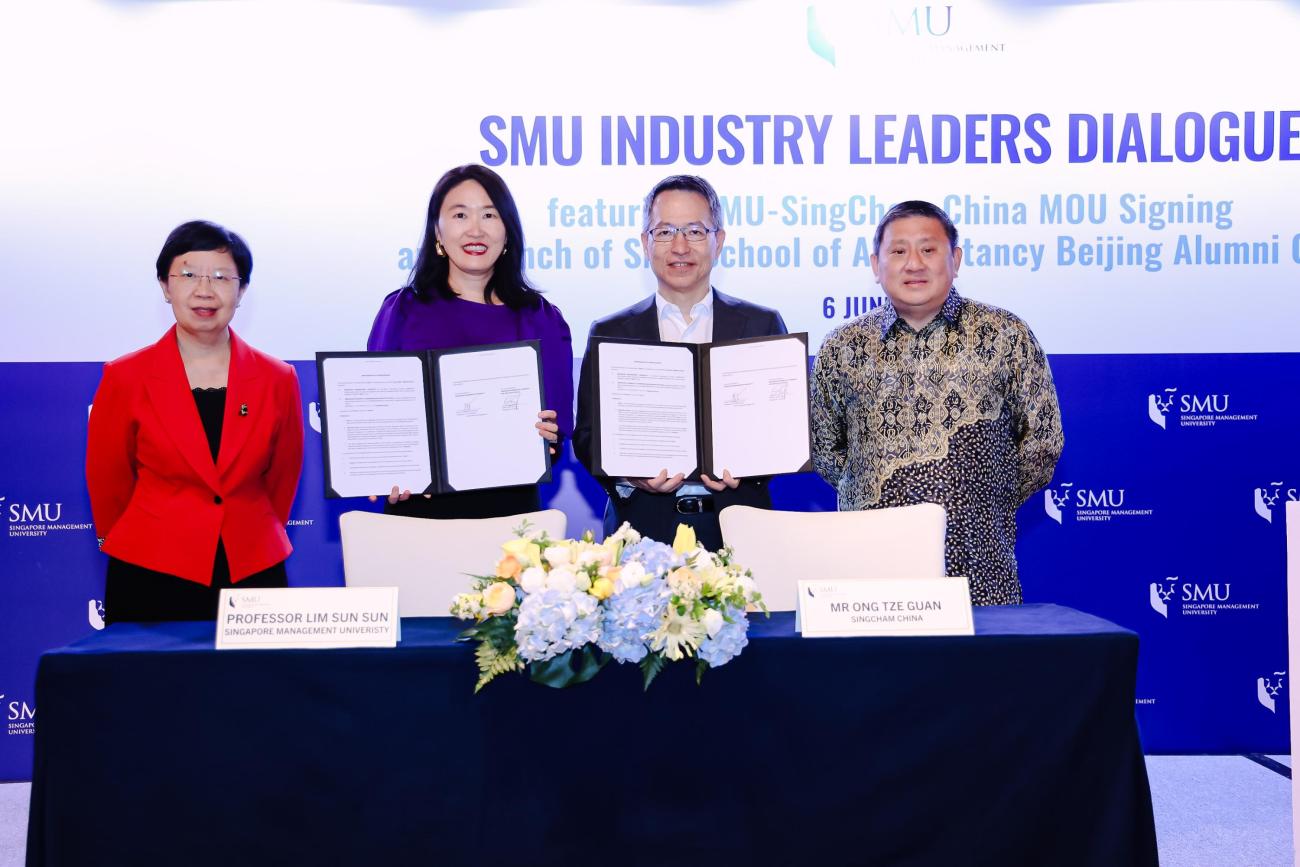
On 6 June 2024, the Singapore Management University (SMU) Industry Leaders Dialogue in China was held in Beijing at the Hong Kong Jockey Club Beijing Clubhouse. Close to 120 SMU International Advisory Council in China members, SMU alumni, and guests from industry and academia attended the event, that was organised in collaboration with SMU’s International Advisory Council in China, chaired by Mr Daryl Ng, Deputy Chairman, Sino Group.
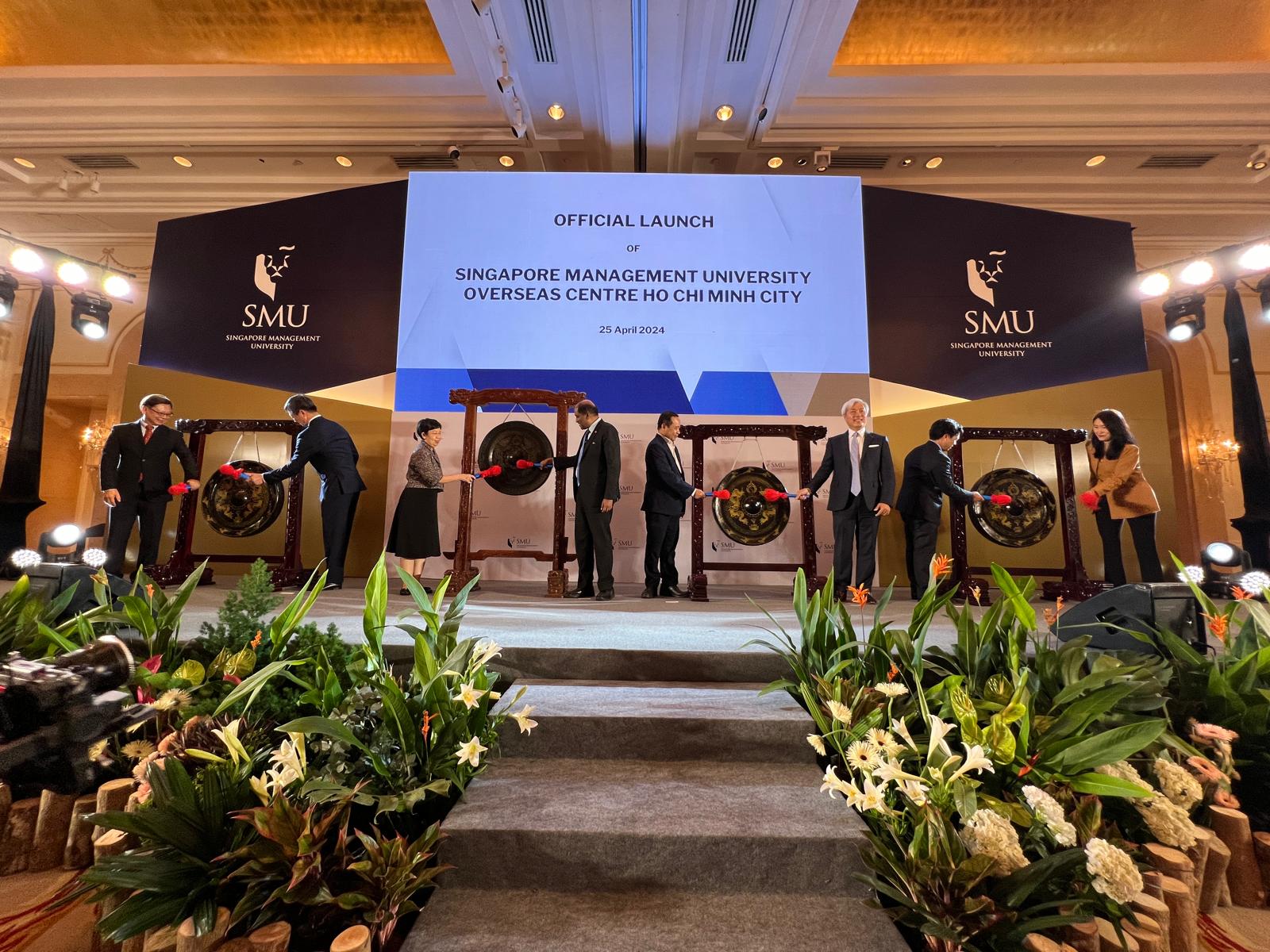
SMU has established longstanding relationships with leading Vietnamese organisations such as VinaCapital, VinGroup and Indo-Trans Corporation through its International Advisory Council. The presence of an overseas centre in Ho Chi Minh City will help to boost collaboration opportunities with local partners in education and industry, while also bolstering human capital development in Vietnam and promoting the exchange of knowledge and expertise.
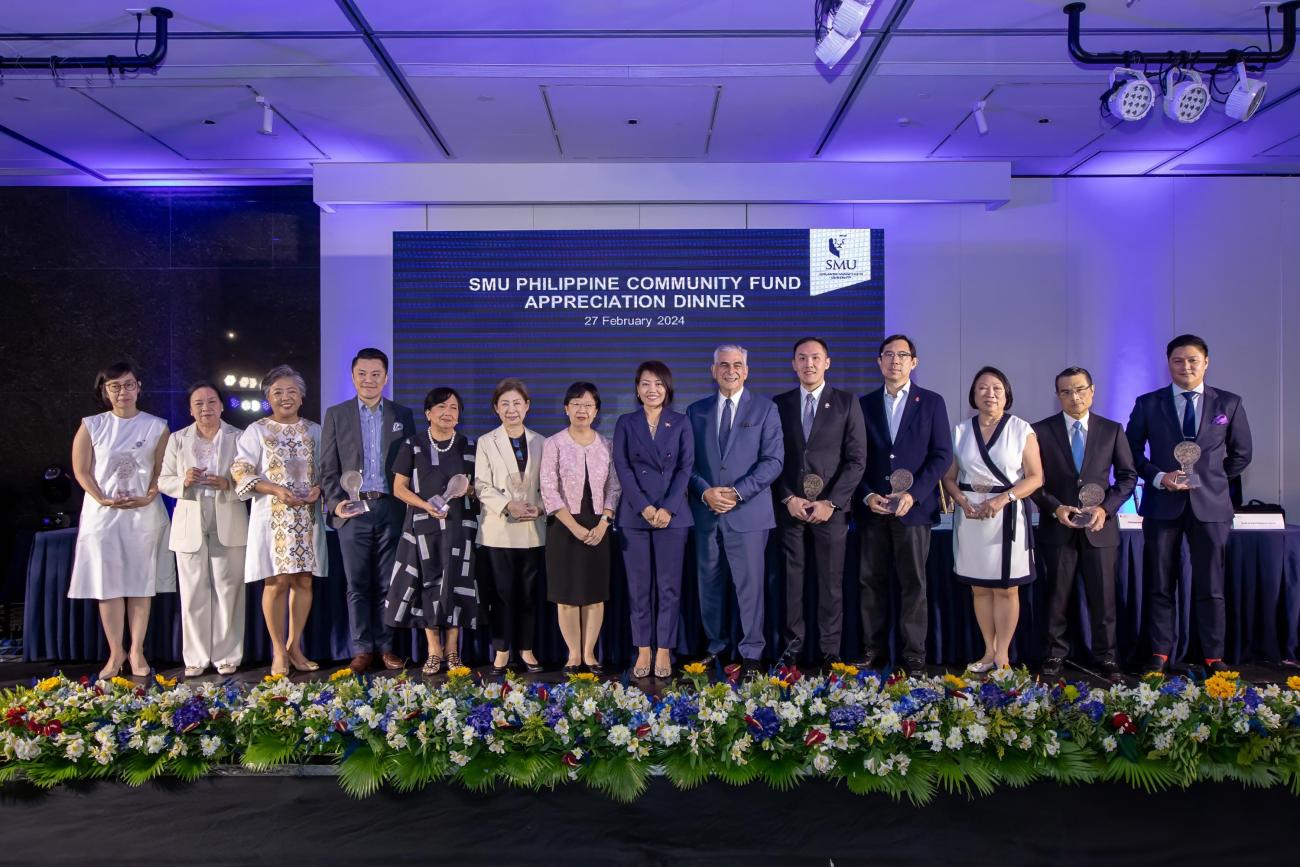
Filipino Students to Benefit from $4 million Gifted to SMU
The fundraising effort towards the SMU Philippine Community Fund was initiated by Mr Jaime Augusto Zóbel de Ayala, Chairman of Ayala Corporation and Chair of SMU International Advisory Council (IAC) Philippines, who served as a member of the SMU Board of Trustees from 2010 to January 2024. Under his leadership, members of the SMU IAC Philippines and various Philippine conglomerates, foundations and individuals came together to champion the educational aspirations of outstanding Filipino students.
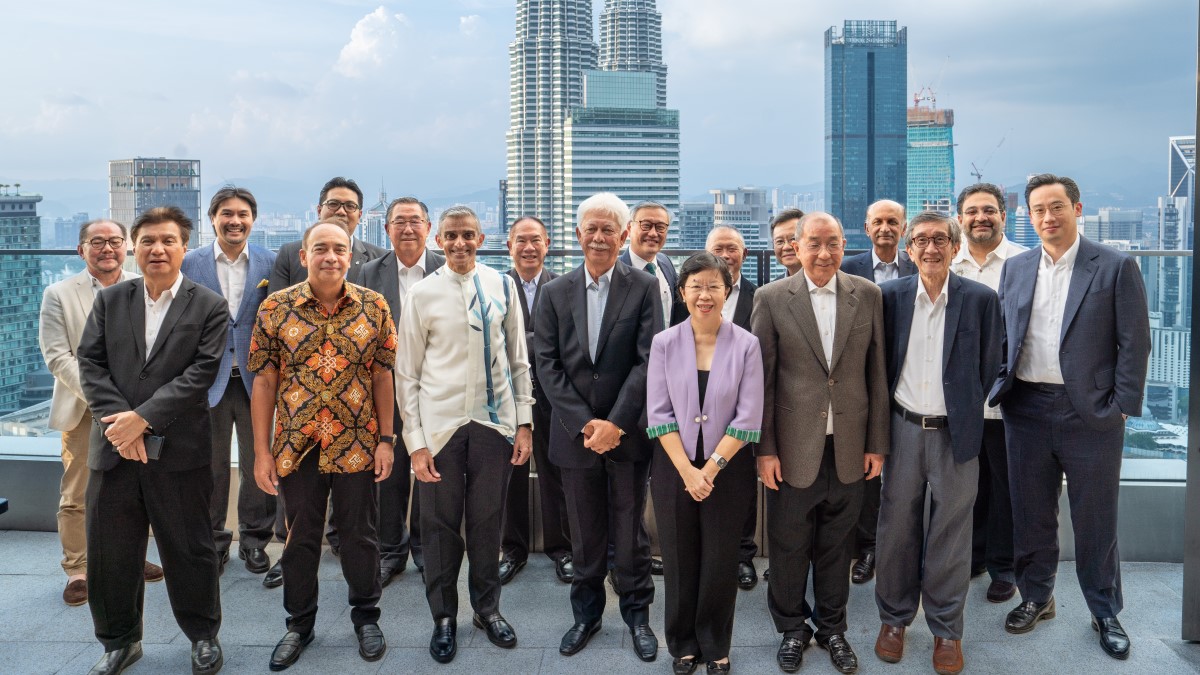
Engaging with the SMU International Advisory Council Malaysia
Since its inception in 2020, the SMU IAC Malaysia has established various unique opportunities for SMU students, such as annual Sustainability Study Missions to Malaysia and partnerships with institutions like Universiti Teknologi Petronas that support bilateral programmes and joint lectures. In her address, SMU President Professor Lily Kong affirmed SMU’s continued commitment to bolster regionalisation efforts.
A Look Back at 2022: SMU IAC Report
Marking the fifth year of SMU's International Advisory Council initiative, 2022 has been a significant milestone for the IAC. Take A Look Back at 2022: SMU IAC Report.
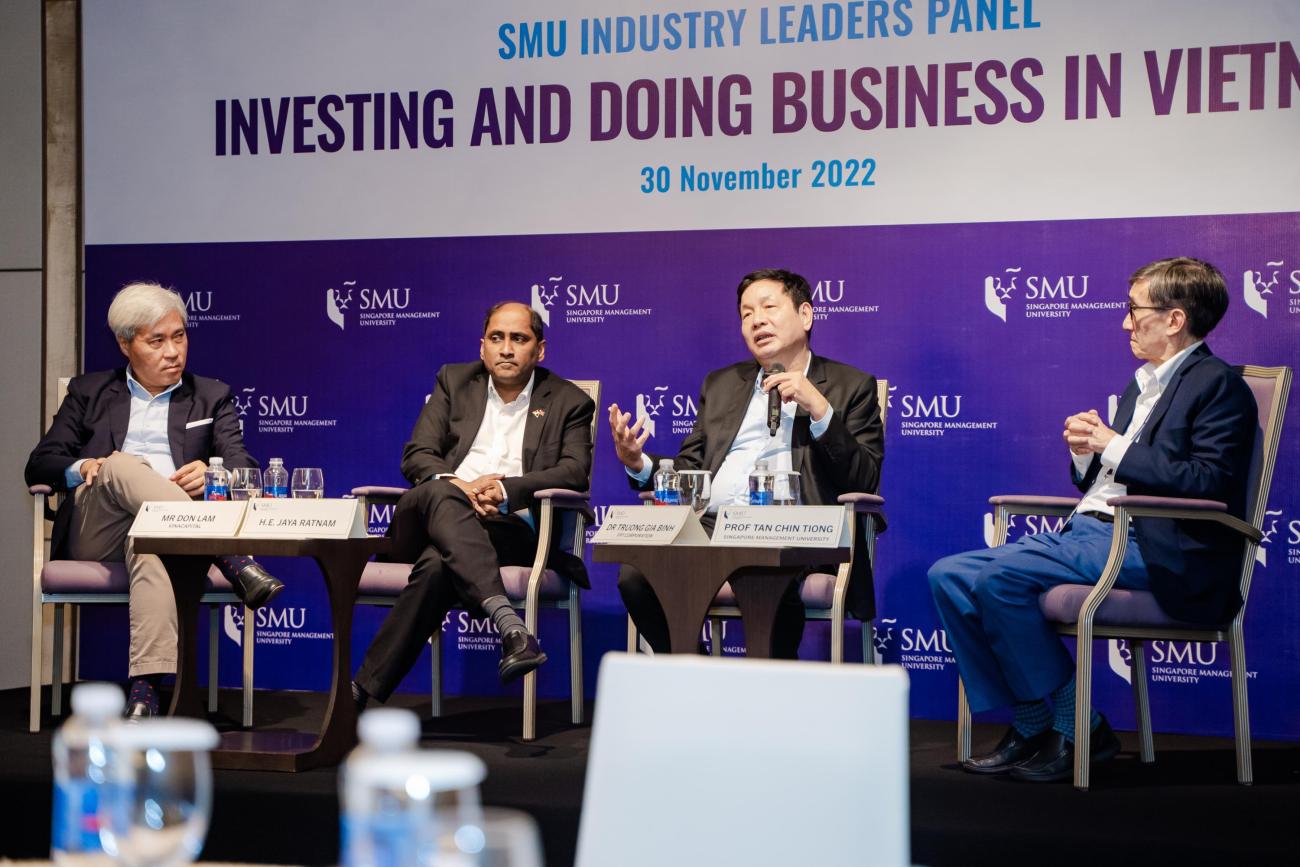
Deepening SMU’s Engagement with Vietnam
A three-day visit to Hanoi was part of an SMU Learning Journey held in conjunction with the 5th anniversary of SMU’s International Advisory Council (IAC) initiative across Asia. The SMU delegation was also joined by nine regional IAC members and their representatives from across the region.

Building climate-resilient cities
Besides the 3R’s of reduce-reuse-recycle, people should also consider ASI – avoid, shift, and improve.
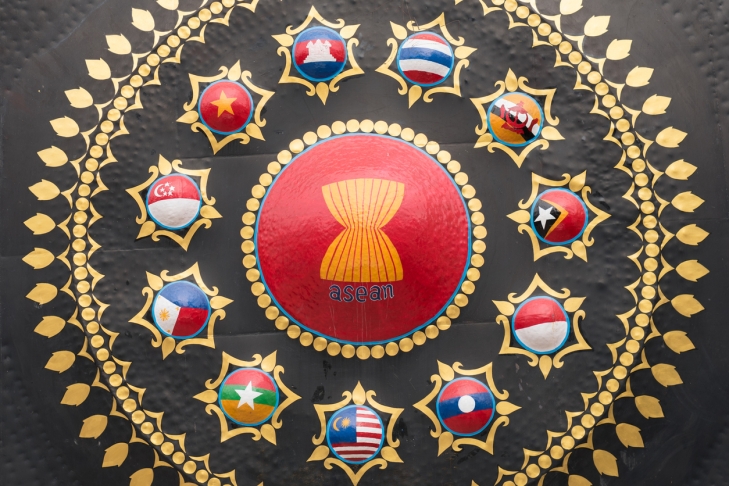
The Asian century? Or the ASEAN century?
In 2020, ASEAN overtook the United States to become China’s largest trading partner. The next year saw a 28 percent jump in trade volume to US$878 billion, with Vietnam, Malaysia and Thailand accounting for the lion’s share. Chinese exports to the region increased 26 percent year-on-year to US$483 billion, but imports rose even faster, up nearly 31 percent to US$394 billion.

In November 2021, Google, Temasek and Bain & Company projected the region’s digital economy to grow to US$360 billion by 2025, revised from an earlier estimate of US$300 billion. By 2030, that number is expected to reach US$1 trillion, propelled by “a fast-growing base of digital consumers and merchants, acceleration in e-commerce and food delivery”.
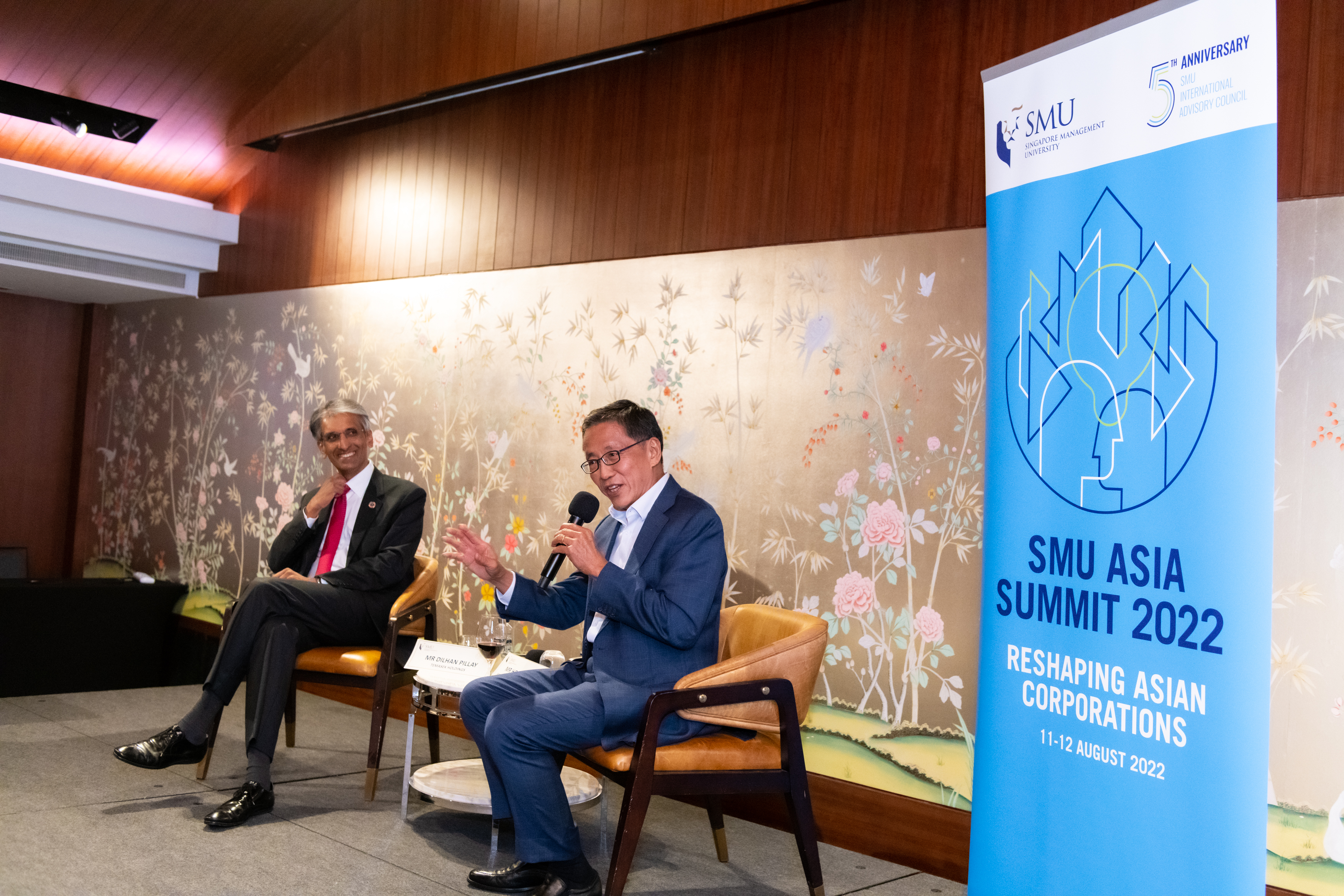
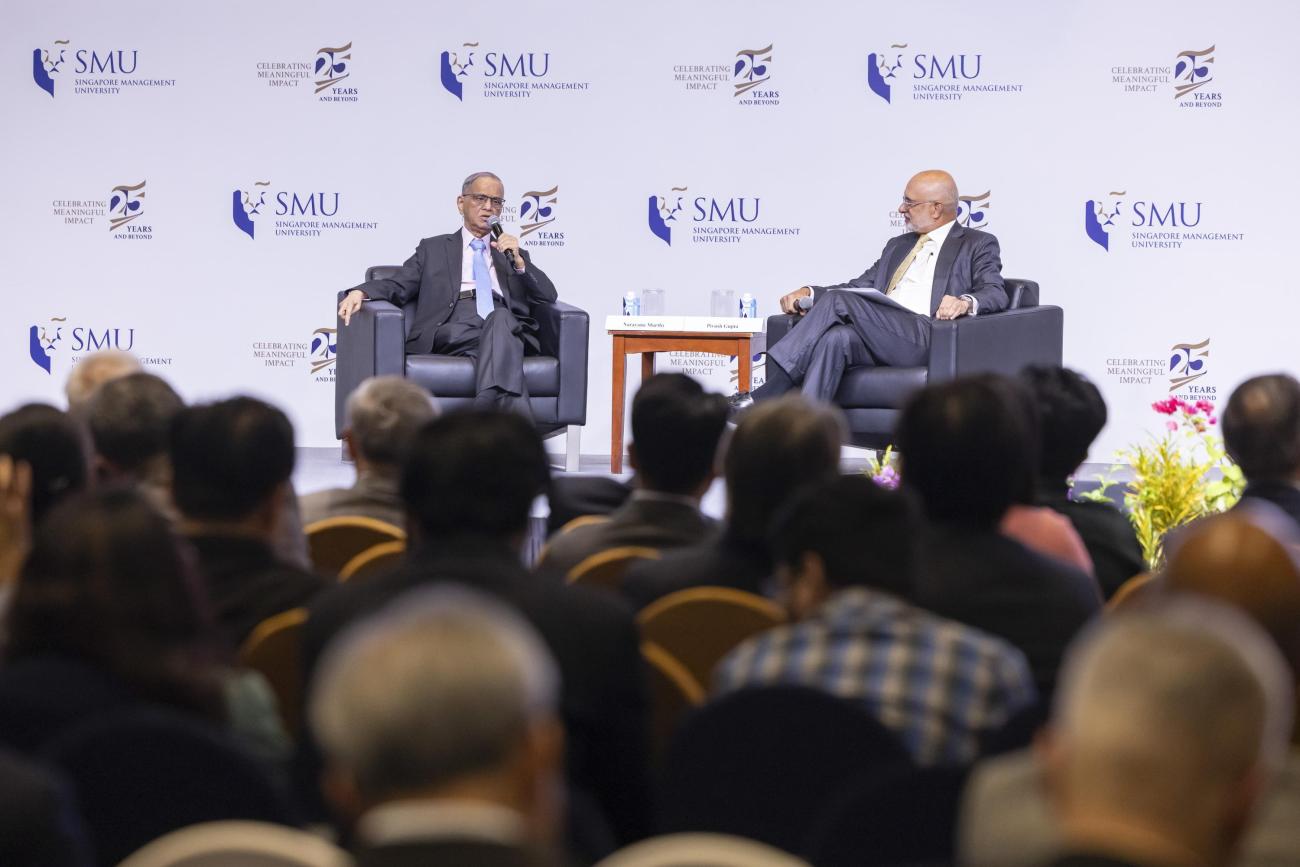
Fireside chat with Temasek's CEO: Unlocking Southeast Asia's potential in a time of uncertainty
On 11 August 2022, Mr Dilhan Pillay Sandrasegara, Chief Executive Officer of Singapore’s state-owned investor Temasek Holdings, sat down with SMU Founding Chairman, Mr Ho Kwon Ping for a fireside chat as part of SMU’s International Advisory Council (IAC) Asia Summit.
A Look Back at 2021: SMU IAC Report
A significant year of cultivating connections, expanding partner ecosystems, and growing country-specific collaborations across all our seven Councils. Take A Look Back at 2021: SMU IAC Report.
Sustainably feeding the world in the 21st century
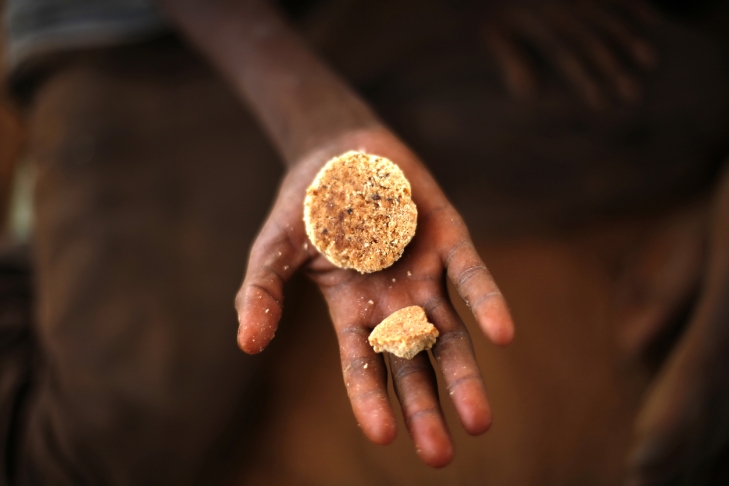
By 2050, the global population is set to grow by 2 billion. To meet the world's growing appetite and build a resilient future, businesses through the global food system are increasingly investing to close yield gaps, increase food production limits, and reduce food waste in order to build a more sustainable ecosystem, bolstered by multi-stakeholder partnerships and technological innovation. Join us as we explore a myriad of strategies and approaches that businesses through the value chain, both big and small, have and can adopt to drive food sustainability and play a role in safeguarding the global food supply for generations to come.
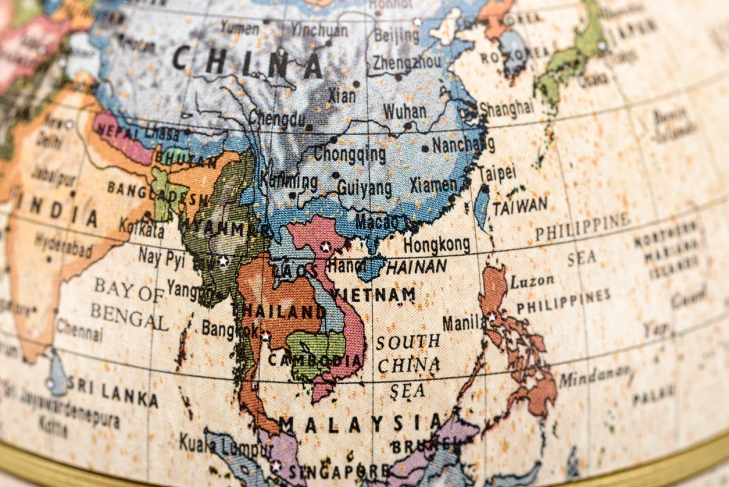
As the world seeks economic recovery from COVID-19, much hope seems focused on Asian markets for growth. While the situation is still very fluid, several interesting phenomena, including the Zoom boom, telemedicine revolution, digital transformation, and reinvigorated interest in sustainability are spawning a myriad of opportunities in multiple industries, both old and new. When it comes to business in the 'new normal', where should you be looking to place your bets within Asia?
Sustainability and the post-COVID normal
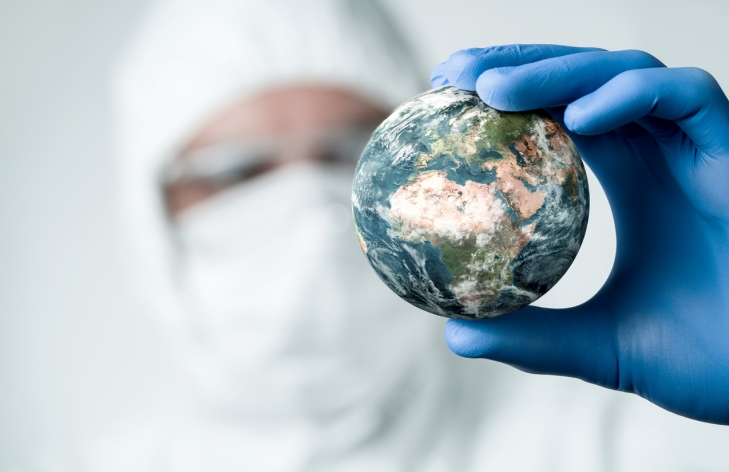
The COVID-19 pandemic has highlighted the need for strategic disaster preparedness and innovation plans across public and private sectors, with many businesses seeking to embed organisational resilience in the face of crisis and acknowledging the pressing risks of climate change. But the drive towards more sustainable business practices isn't a recent phenomenon. Investors and financial institutions have been inching in support of businesses that demonstrate positive environmental, social and governance practices. And calls for a more diversified, fossil fuel-free supply chain have prompted differing country investment in renewable energy, particularly in manufacturing regions like Asia. In what has been deemed the decisive decade of the 2020s, how might these new sustainability trends impact the who, what, where, why and how of business in Asia?
A Look Back at 2020: SMU IAC Report
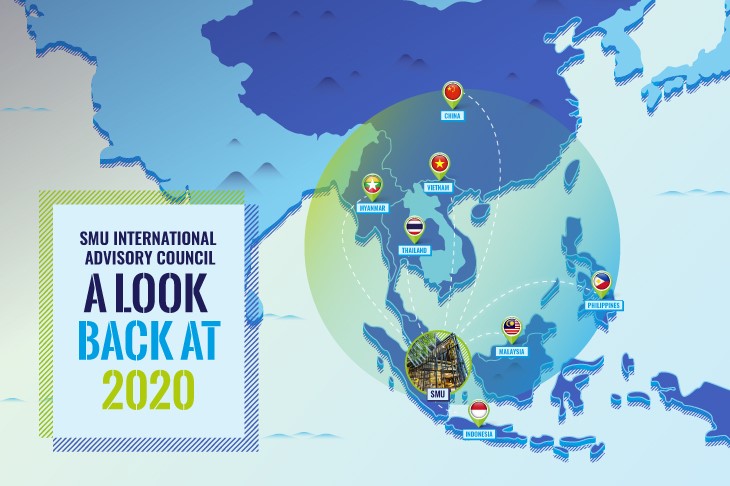
As we wrap up this unprecedented year, this report looks back at some of the key IAC activities, milestones and country-specific projects from 2020.
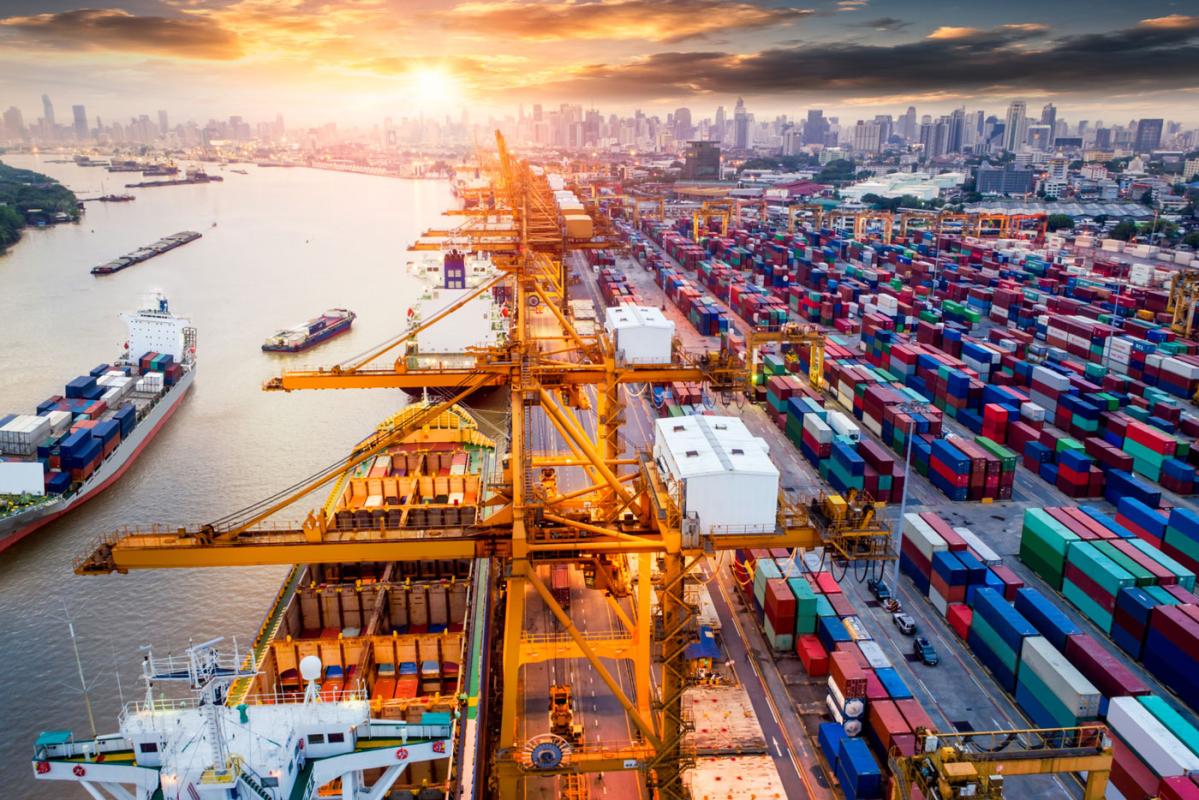
SMU Industry Leaders Virtual Dialogue featuring Mr Chartsiri Sophonpanich
Chartsiri Sophonpanich was the Leadership Perspectives speaker at the SMU Industry Leaders Virtual Dialogue on 16 July 2020, where he shared his belief that working capital will help SMEs recover and restart the economy. He is President of Bangkok Bank and Chair of SMU IAC Thailand.