

Vietnam: Growing beyond a state-planned economy
Vietnam,
The world’s emerging manufacturing hub wants to double its private sector to 40 percent of the economy by end-2021. VinaCapital’s CEO Don Lam is part of a team that’s helping to make that happen
Vietnam’s economy has been a star performer for the past few years, especially since the private sector was officially acknowledged as a key economic component by the Communist Party of Vietnam (CPV) at the 12th National Congress in 2016. With a three-year average growth rate just shy of seven percent, things are looking up.
Keeping Thailand going amid the COVID-19 storm
Thailand,
At the end of June, the Bank of Thailand (BOT) forecast an 8.1 percent GDP contraction for 2020, following the central bank’s earlier prediction of a 5.3 percent drop. COVID-19 has hit the country hard, with the World Bank expecting the Thai economy to take “more than two years to return to pre-COVID-19 GDP output levels”.

The road ahead for global supply chains
Hong Kong,
The “Rules of origin” section of the World Trade Organization’s (WTO) website starts with a paragraph that begins thus: “Determining where a product comes from is no longer easy when raw materials and parts criss-cross the globe to be used as inputs in scattered manufacturing plants”.

Leading in the time of COVID-19
Manila,
Jaime Augusto Zobel de Ayala has always planned long-term as the Chairman and Chief Executive Officer of Ayala Corporation, one of the Philippines’ largest and oldest conglomerates. With interests in multiple industries that run the gamut from retail to renewable energy, Ayala was always looking well into the future.
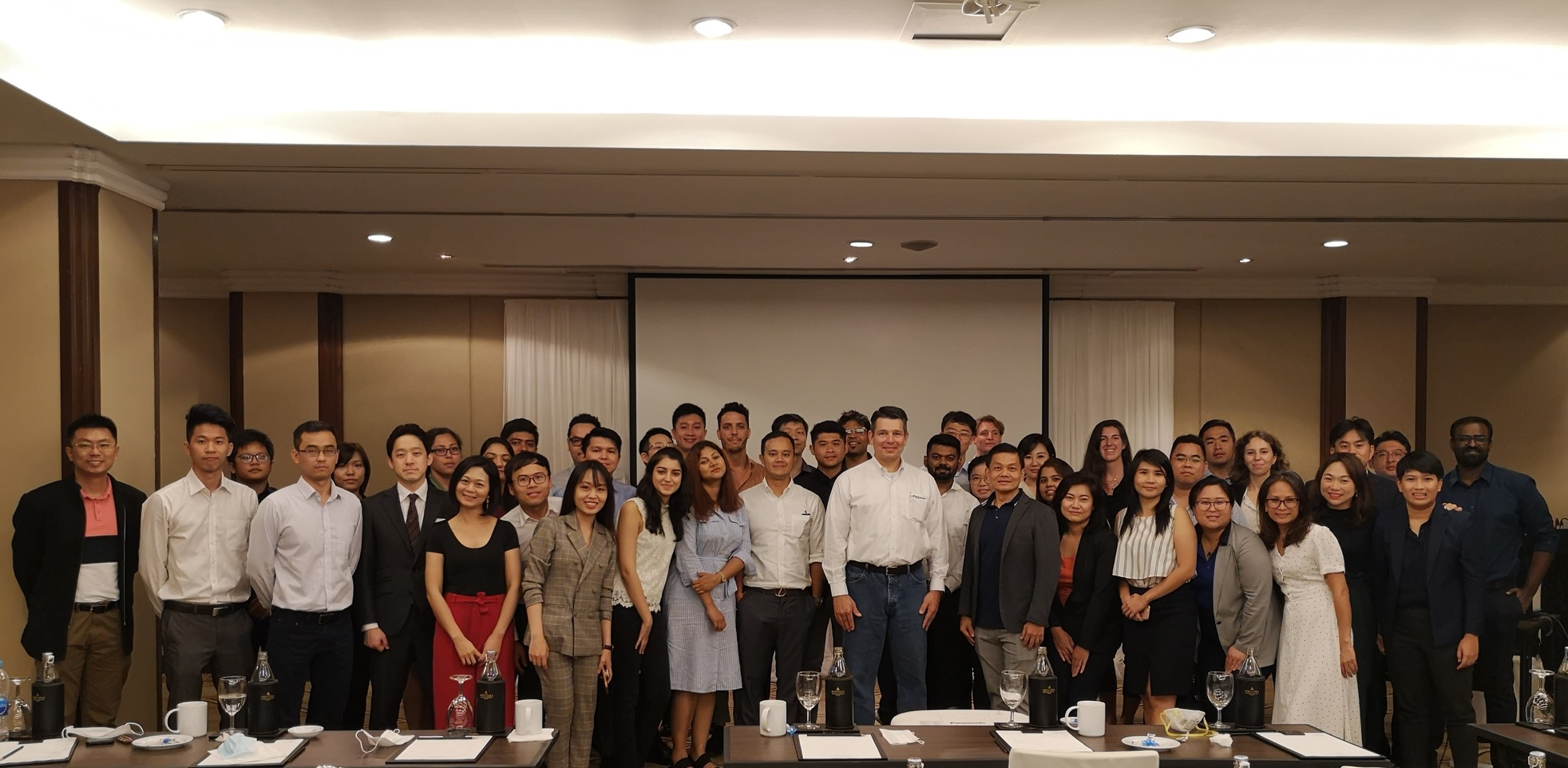
MBA Study Mission to Bangkok
Bangkok,
44 MBA students were hosted by some IAC Thailand members to learn about the nuances of business and management practices in Thailand, along with sustainability policies, efforts and practices.
Artificial Intelligence, Real Impact
Shenzhen,
In a recently published report on Artificial Intelligence (AI) by MIT and Boston Consulting Group, 45 percent of business leaders interviewed expressed belief that AI posed a strategic risk to their business, up from 37 percent in 2017.