





Synopsis
It is a common-sense principle that a country’s laws should only apply inside a country’s borders. In the United States, this idea is encapsulated in a canon of construction known as the presumption against extraterritoriality. Under the presumption, a court will assume that legislation applies only inside the United States, unless Congress expresses clear intent to the contrary.
But what happens when a patent is violated inside the United States, but the damages are extraterritorial? In WesternGeco L.L.C. v. Ion Geophysical Corp., the Federal Circuit held that a patent holder cannot recover any damages for losses incurred outside the United States, even those that directly flow from a act of infringement under U.S. patent law. Notably, the case arose under § 271(f) of the Patent Act, which explicitly defines certain extraterritorial acts as infringing. Moreover, the damages in the case were incurred on the high seas, making it unclear whether any country’s law was directly applicable. This case is currently being reconsidered by the Federal Circuit in light of a recent patent damages decision from the Supreme Court.
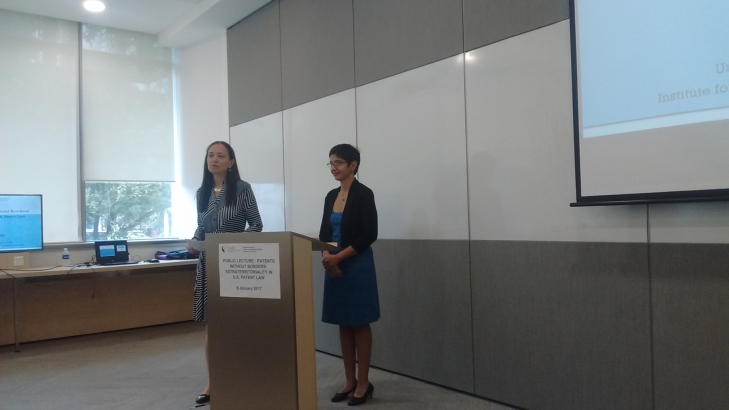
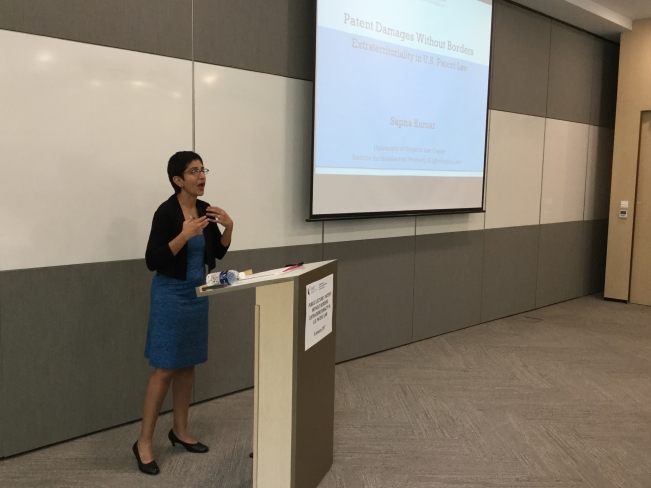
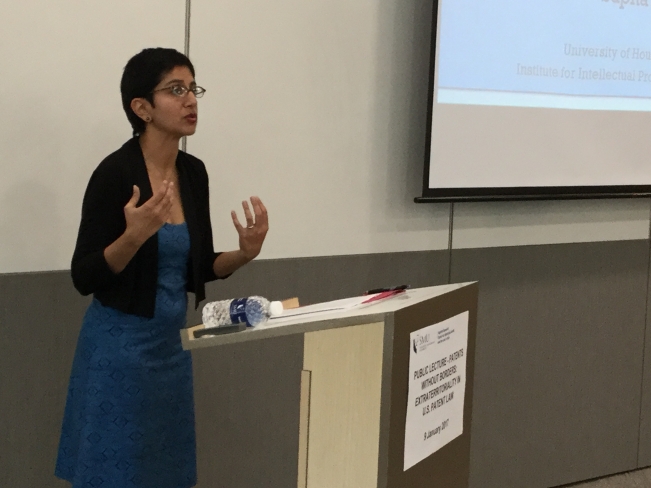
In her presentation, Professor Kumar will discuss the territorial limits of U.S. patent law. She will argue that presumption against extraterritoriality was established to prevent U.S. law from applying to acts that commence and occur wholly outside the United States and was not intended to cover situations where harm flows from an act of domestic patent infringement. By creating this bright-line rule, she maintains that the court has unduly restricted the ability of patent holders to recover damages, including in cases where there is no other applicable law. Professor Kumar proposes that courts employ a more flexible balancing test that can account for the interests of other countries.
Speaker

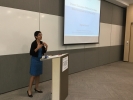
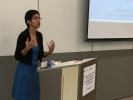
Sapna Kumar is a George Butler Research Professor of Law at the University of Houston Law Center (UHLC). She is also a co-director of the UHLC’s Institute for Intellectual Property and Information Law. In 2013, Professor Kumar was the recipient of the University of Houston’s Teaching Excellence Award and was voted “Faculty of the Year.” She is the author of several important law review articles, including Regulating Digital Trade (Florida Law Review) and Life, Liberty, and the Pursuit of Genetic Information (Alabama Law Review). Professor Kumar is a graduate of the University of Chicago Law School, where she was a staff member on the Chicago Law Review. She was a Faculty Fellow at Duke Law School, where she was affiliated with Duke University’s Center for Genome Ethics Law & Policy. Prior to entering academia, Professor Kumar practiced intellectual property litigation in Chicago at Kirkland & Ellis LLP and at Pattishall McAuliffe. She also clerked for the Hon. Kenneth Ripple on the U.S. Court of Appeals for the Seventh Circuit.
Programme
2.30pm - Registration
3.00pm – Lecture
4.30pm – End of Event
Public CPD Points - 1.5 points
This programme is an Accredited CPD Activity under the SILE’s CPD Scheme. Participants who wish to claim CPD Points are reminded that they must comply strictly with the Attendance Policy set out in the CPD Guidelines. This includes signing-in on arrival and signing-out at the conclusion of the activity in the manner required by the organiser, and not being absent from the entire activity for more than 15 minutes. Participants who do not comply with the Attendance Policy will not be able to obtain CPD Points for attending the activity. Please refer to http://www.silecpdcentre.sg for more information.
Click here for the newsletter and registration link.

Last updated on 16 May 2018 .
