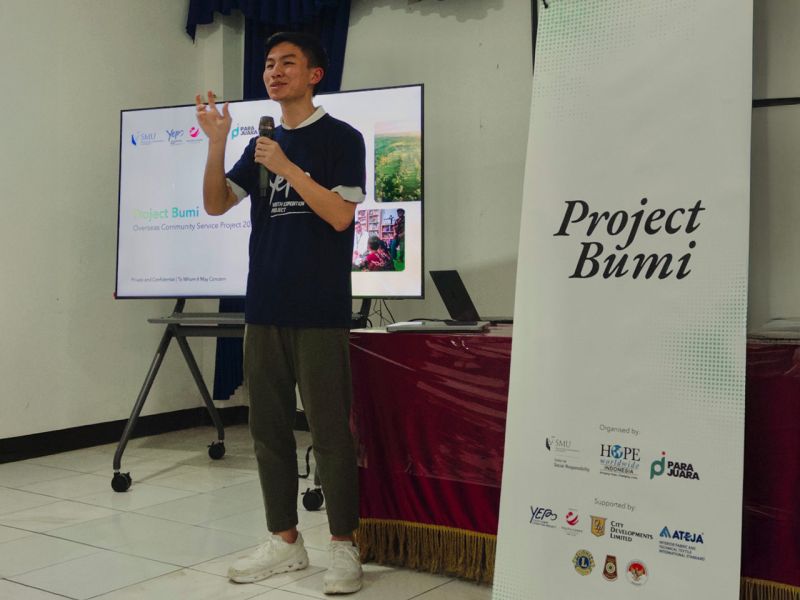
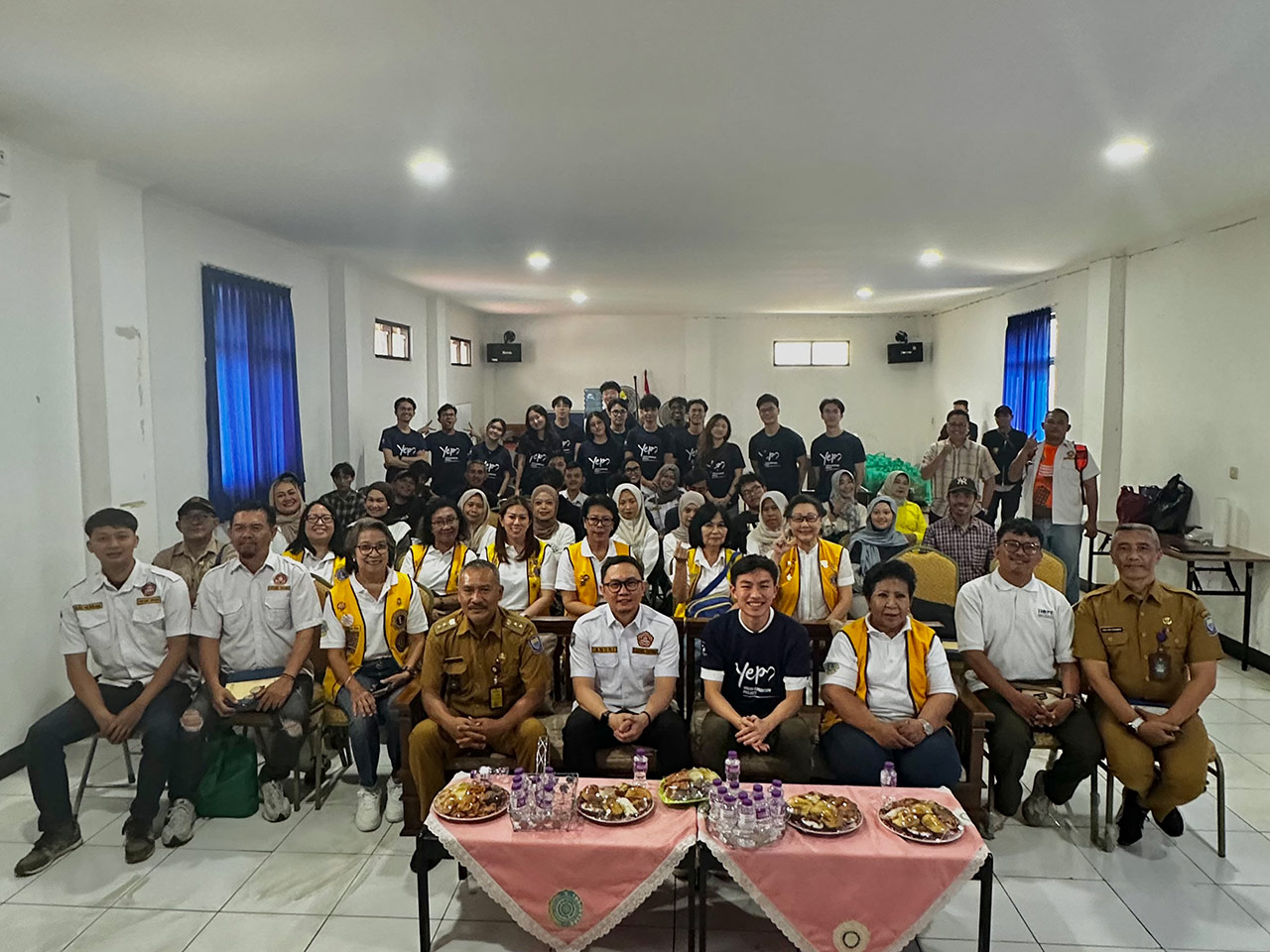
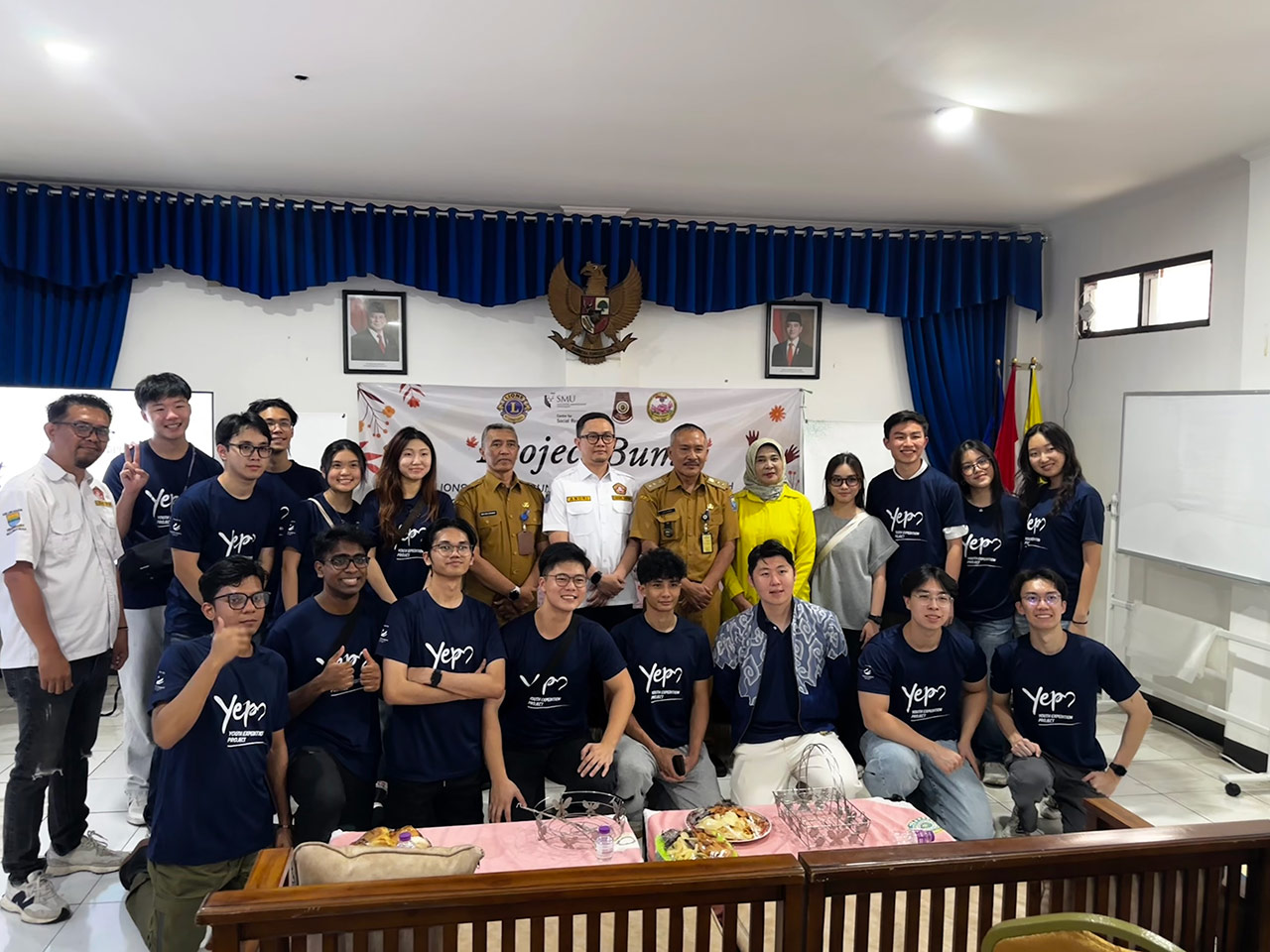
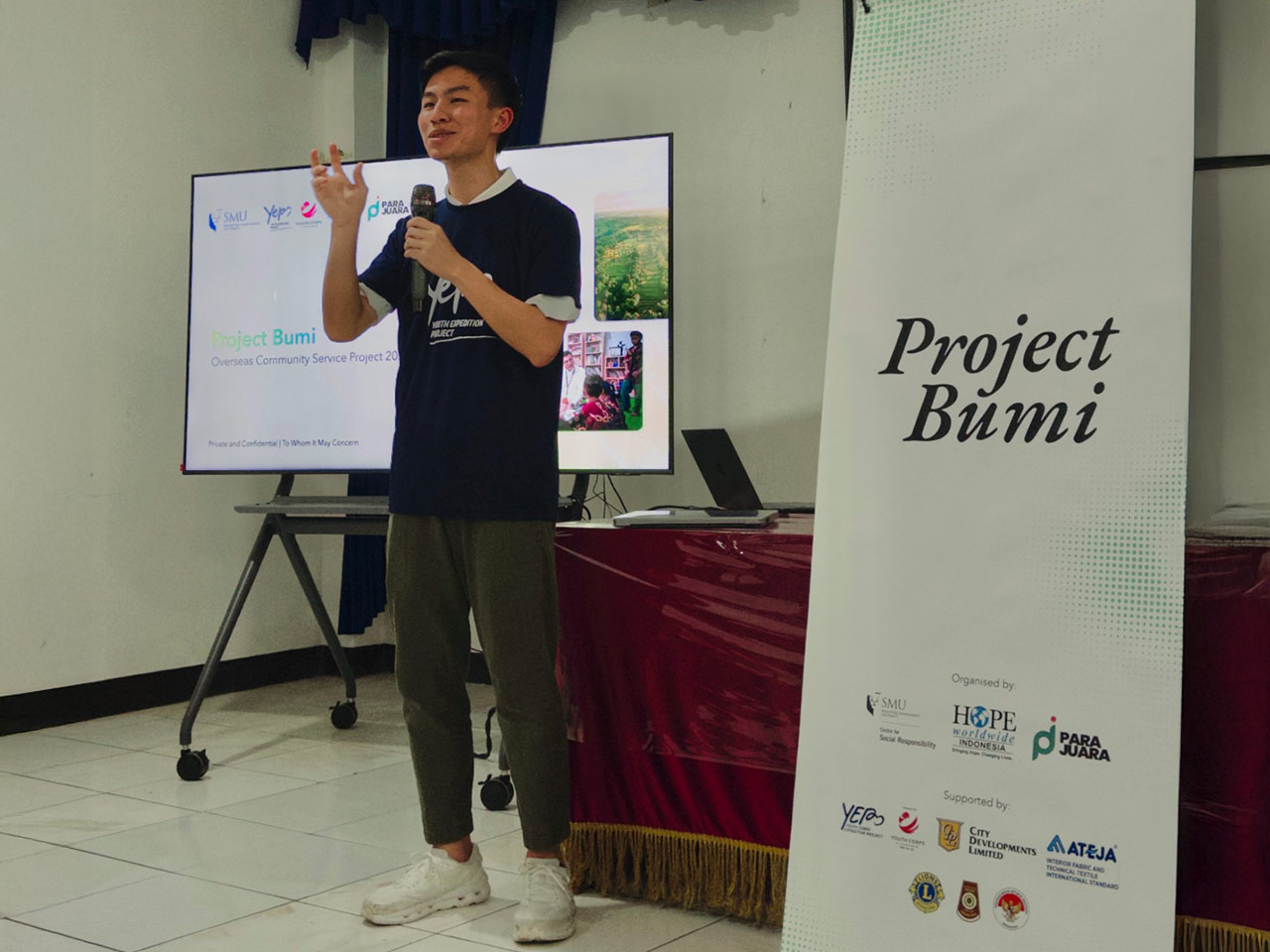
Description of project
- Project name: Project Bumi
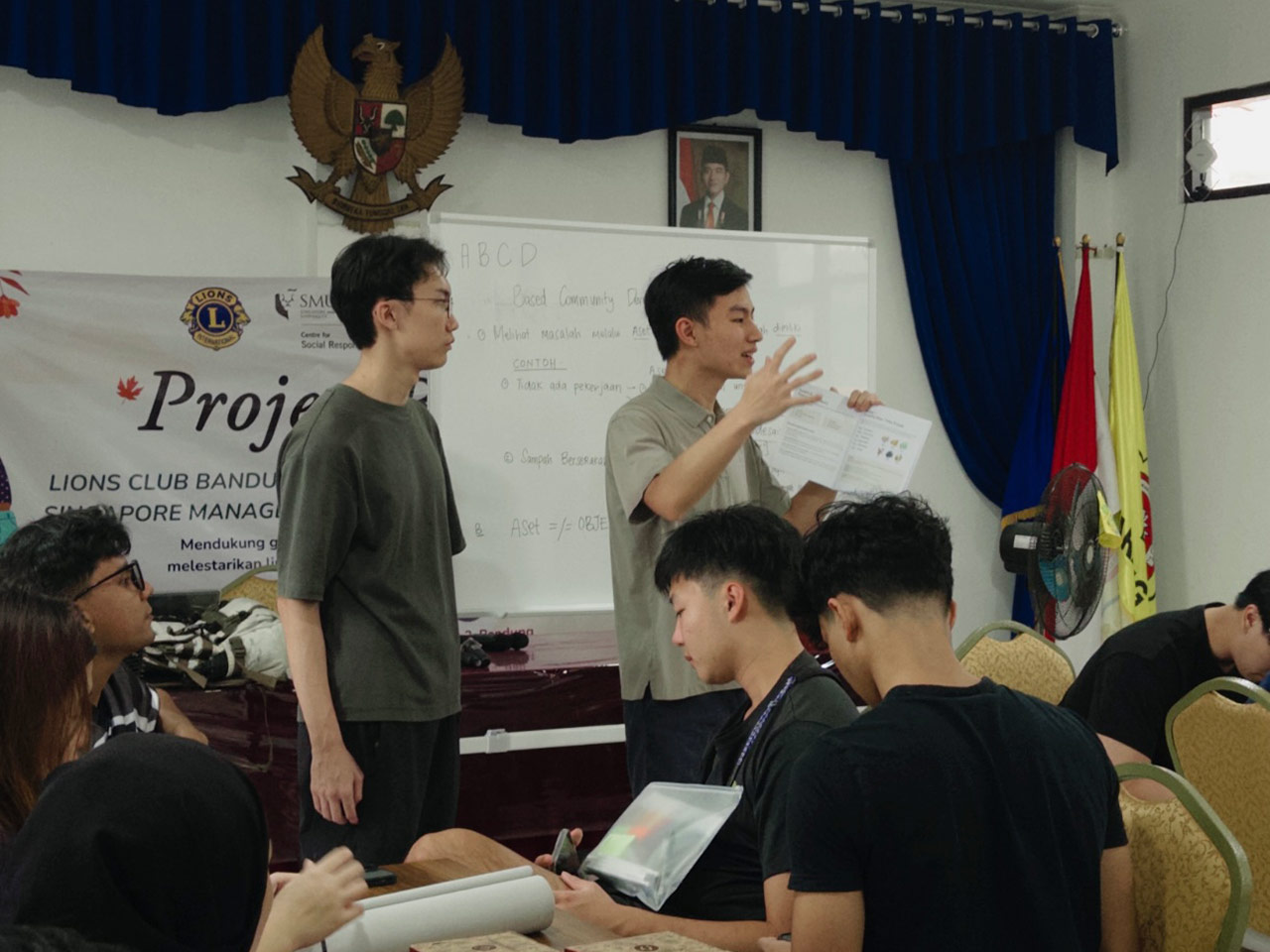
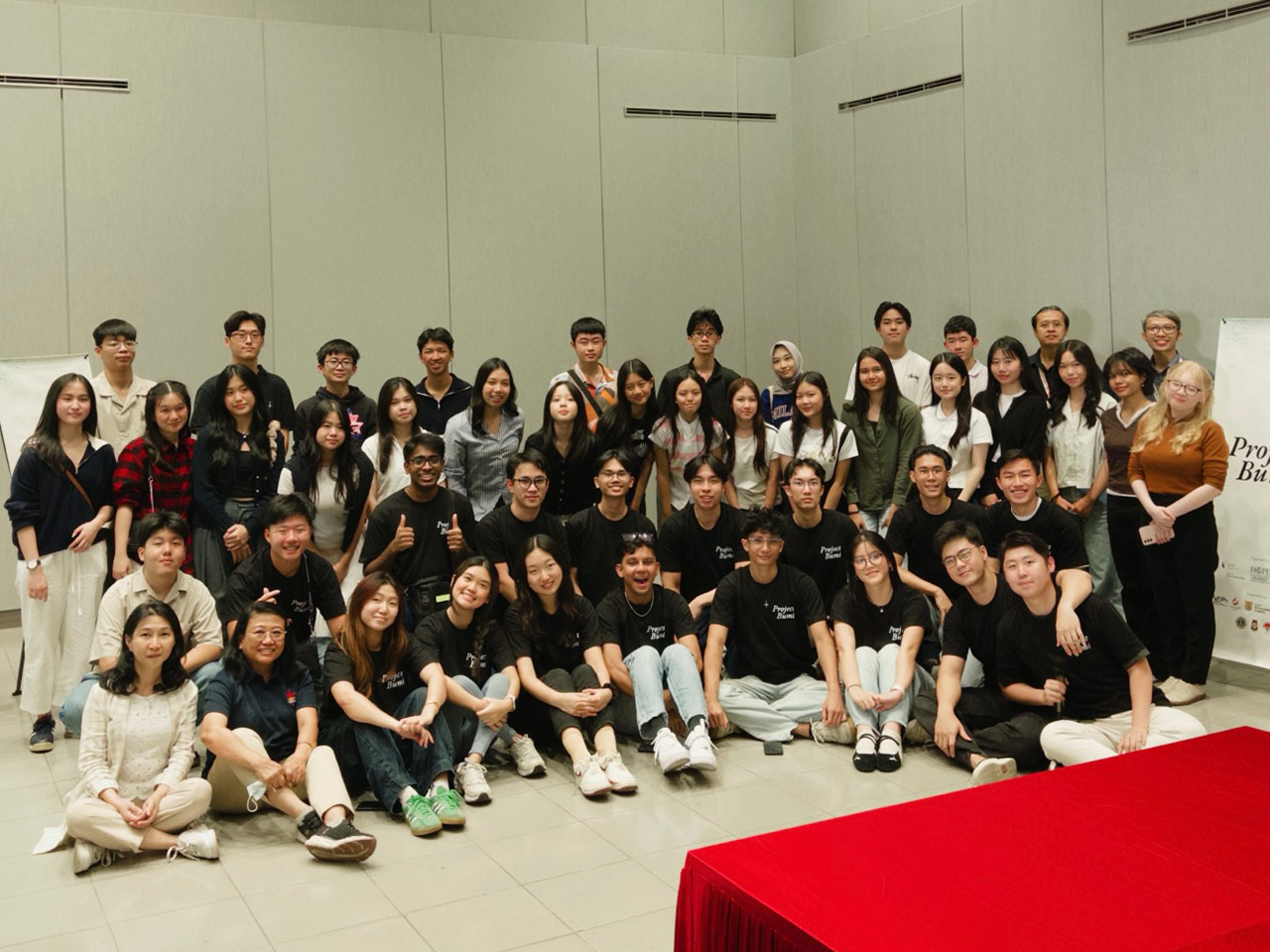
Project Bumi is a student-led Overseas Community Service Project initiated by students from Singapore Management University, founded by a team of Indonesian and Singaporean students united by a shared aspiration to create sustainable and meaningful impact in Indonesia.
As the first SMU community service project to return to Indonesia since the COVID-19 pandemic, Project Bumi seeks to co-create long-term contributions by nurturing grassroots changemakers, partnering with existing social structures, and leveraging pooled capital to support community-driven development – with a particular emphasis on youth group empowerment and mobilisation.
What motivated you to participate in the OCSP? You should add you co-founded it!
My fellow co-founder and I initiated this project out of a shared curiosity and ambition, after identifying a clear gap in community service initiatives focused on Indonesia.
Having grown up in Indonesia before leaving at an early age to pursue our studies in Singapore, we became increasingly aware of the social challenges faced by communities back home, and recognised the opportunity to play a role in catalysing meaningful, community-driven change.
This project therefore serves as a platform for us, as well as for other like-minded international and local students, to contribute meaningfully to the communities we call home.
Describe your overall experience.
The project was a brief but meaningful escape from the usual race for CVs and academic achievements, giving me the chance to witness and help shape social change far bigger than myself.
It was deeply rewarding to share knowledge, steward resources, and collaborate with others to create positive change in a community that is close to my heart.
In what ways did this experience add value to your SMU education and/or professional development?
As an undergraduate student in Politics, Law, and Economics, the project gave me the real-life opportunity to put theory into practice and gain hands-on experience in designing development programmes.
As the Co-Founder and Head of Partnerships at Project Bumi, this experience has also continually sharpened my leadership skills, particularly in charting long-term organisational strategy and building a culture and structure that enable effective collaboration and robust delivery of programmes.
Why Asia? What advice would you give to juniors or fellow students who are considering a similar experience?
Asia, particularly Indonesia, was a natural choice for us due to its proximity to Singapore, which offers cultural familiarity and relative ease of execution.
At the same time, the region continues to face deeply rooted social challenges which create meaningful opportunities for students to play a strategic role in driving transformational change.
Guided by the diplomatic saying “we are neighbours by geography but friends by choice”, Project Bumi strives to advance this vision by fostering collaboration between the Indonesian diaspora, Singaporean students, and like-minded peers committed to creating lasting change in our region.